 Loops House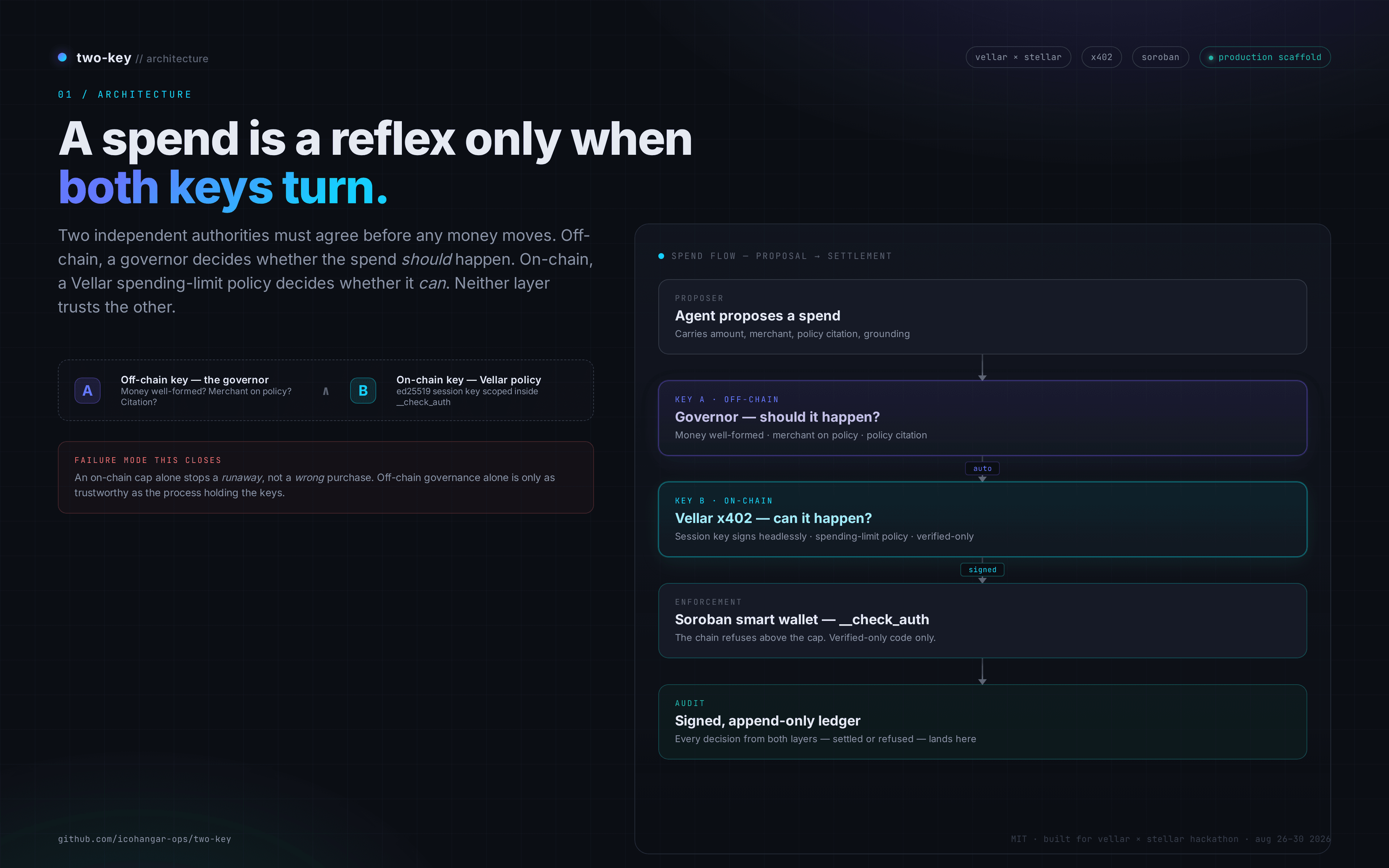

Two-Key
A spend is a reflex only when both keys turn — off-chain intent governance, on-chain enforcement.
VELLAR X STELLAR HACKATHON
Team
1 member- SHOwner
Shyam Desigan
Overview
An autonomous agent pays for what it needs over x402, bounded by two independent authorities that must both agree before money moves.
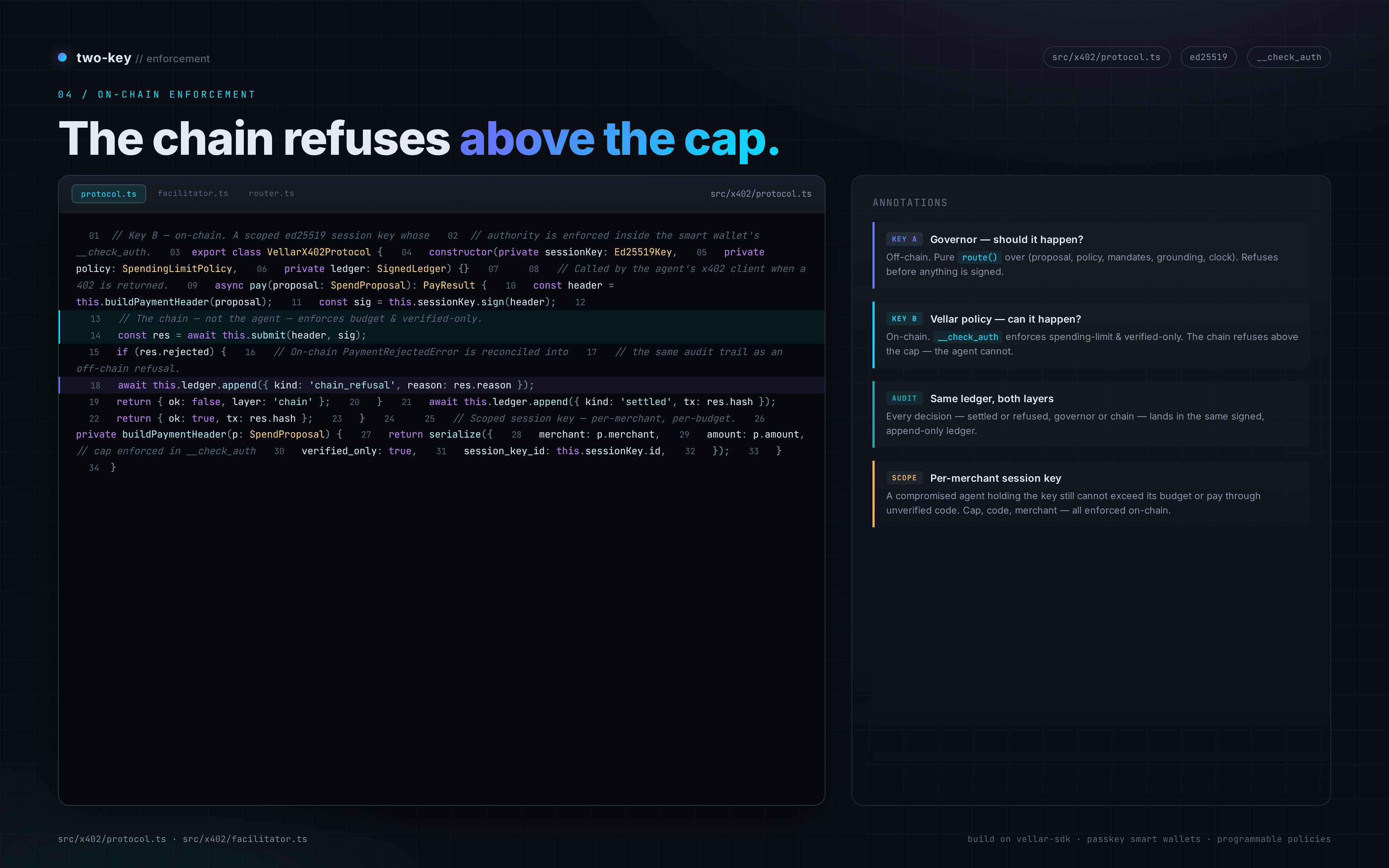
Off-chain, a governor decides whether the spend SHOULD happen: is the money well-formed, is the merchant on policy, can the agent cite the policy authorizing this class of purchase. On-chain, a Vellar spending-limit policy decides whether it CAN — the agent holds a scoped ed25519 session key whose authority is enforced inside the smart wallet's __check_auth, so a compromised agent still cannot exceed its budget or pay through unverified code.
Neither layer trusts the other. An on-chain cap alone stops a runaway agent, not a wrong one: an agent can burn its entire legitimate budget on something no policy ever authorized and the chain will settle every transaction. Off-chain governance alone is only as trustworthy as the process holding the keys. Two keys, held by different kinds of authority, is the smallest arrangement in which neither failure is sufficient alone. Every decision from both layers lands in one signed, append-only ledger.
Track: x402 Agent Payments, with Policy Builder as the enforcement layer.
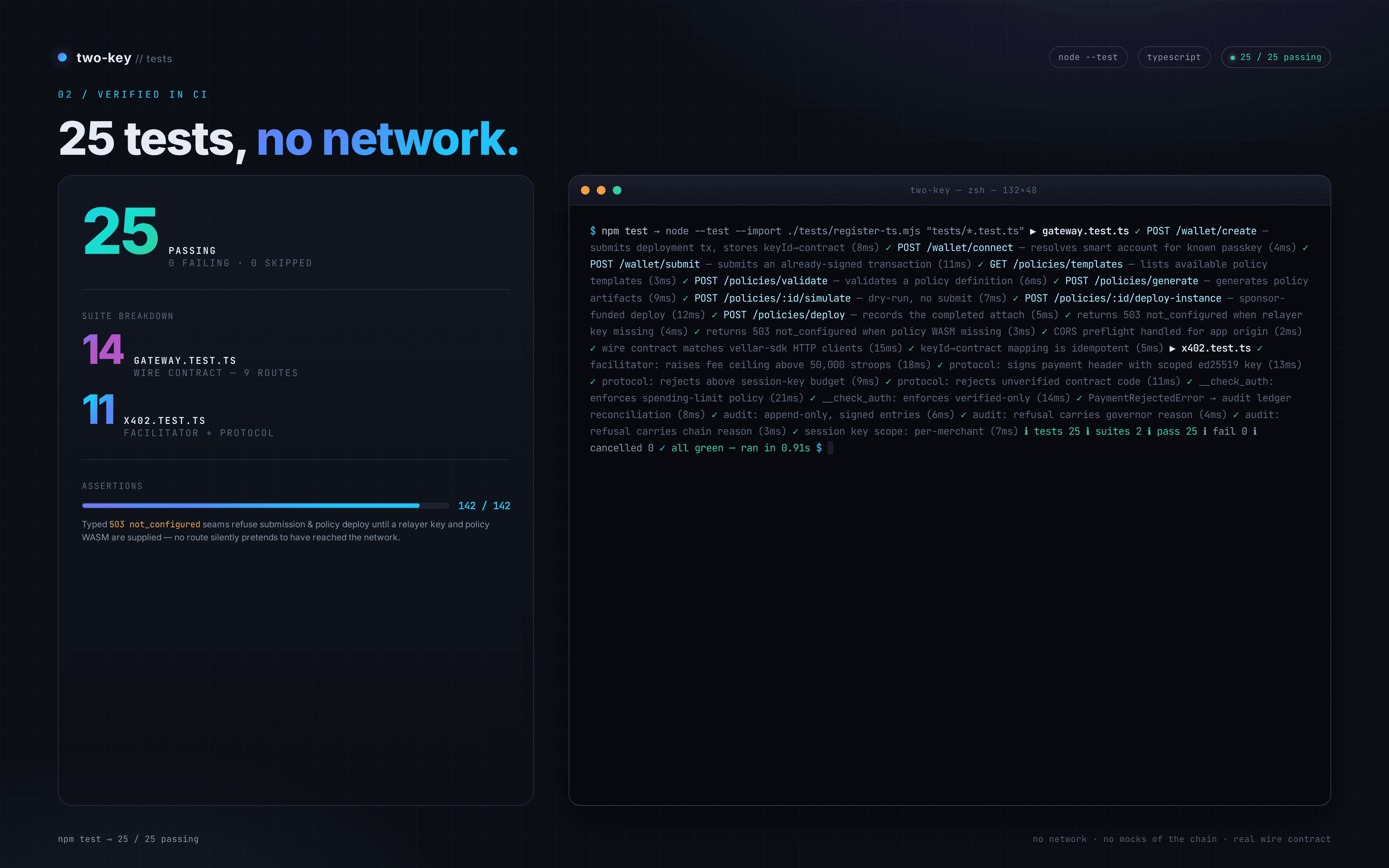
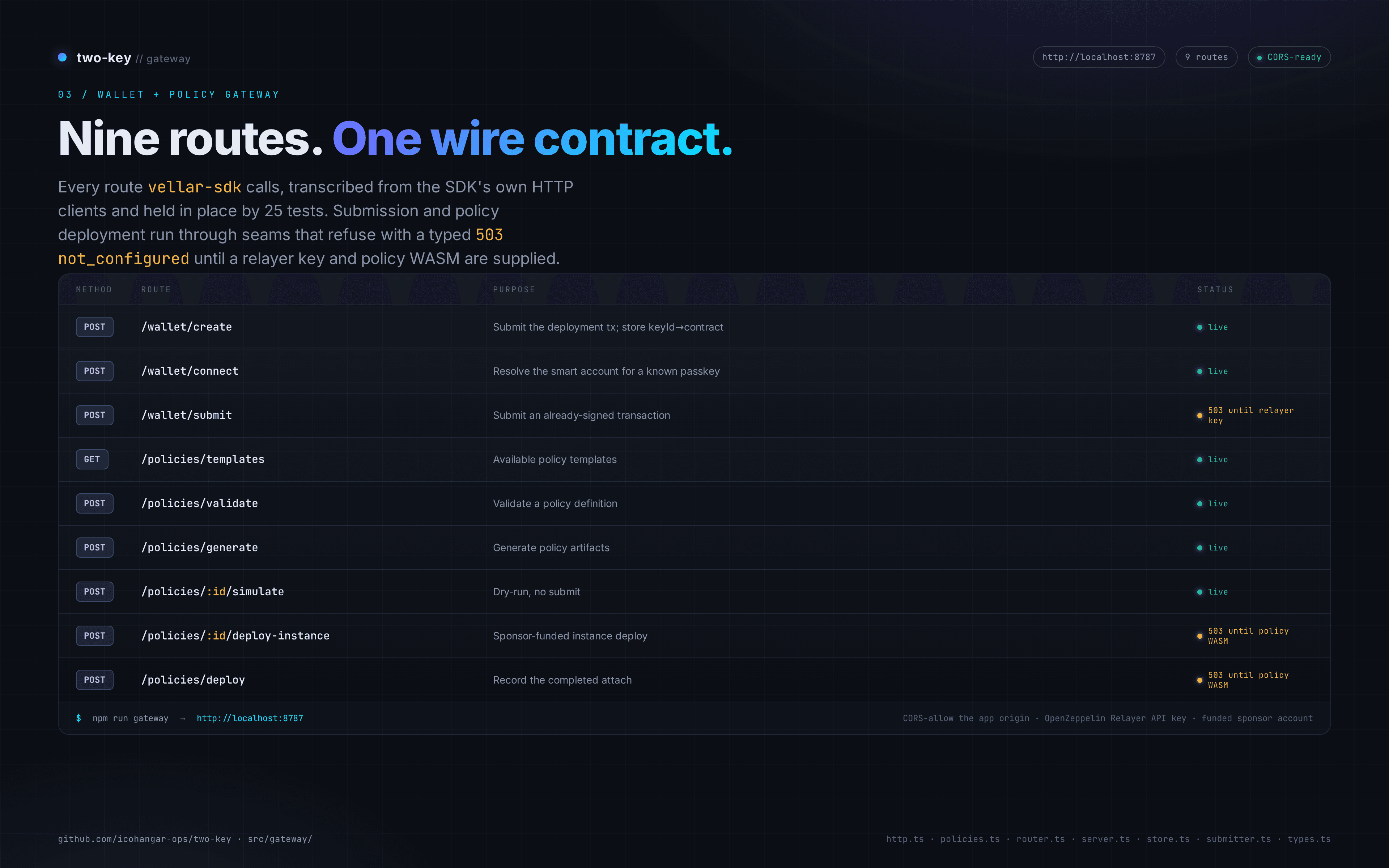
Stack: vellar-sdk 0.6.0 (agents.mint scoped session keys, policies.generate/deploy spending limits, x402.fetch), Stellar/Soroban testnet, self-hosted x402 facilitator (a policy running inside __check_auth exceeds the default 50,000-stroop hosted fee ceiling), TypeScript.
Provenance: the spend governor is reused from icohangar-ops/metabospend (MIT, Aug 3 2026) and disclosed in the README; the entire Vellar layer is built in the event window.