 Loops House

AnnaPurn
A new direction for food.

Vibeathon ’26
Team
1 member- PAOwner
Paras TIrthe
Overview
📌 Executive Summary
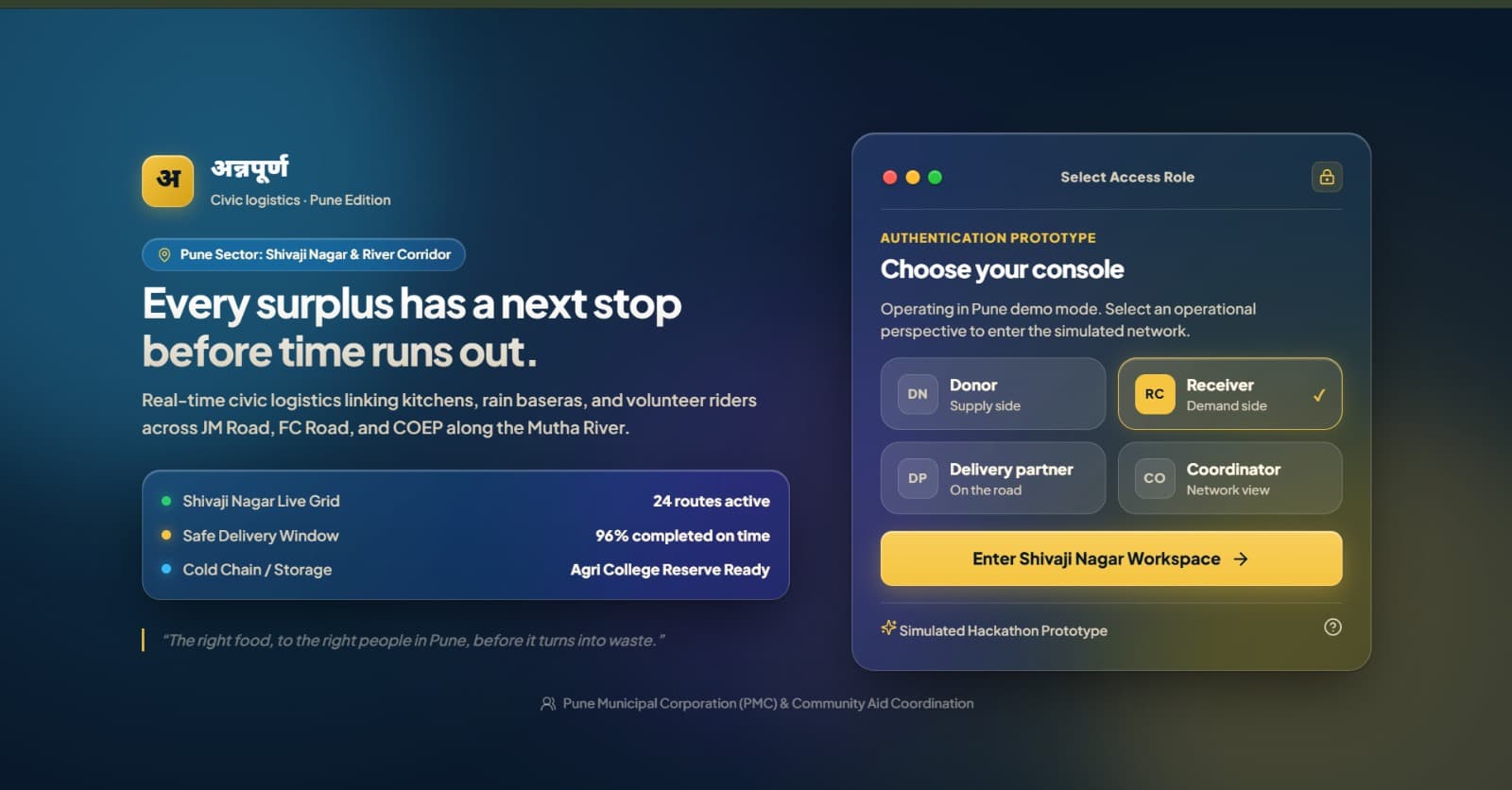
अन्नपूर्ण is a real-time civic logistics and dispatch platform designed to coordinate the redistribution of perishable food and emergency aid. Unlike static donation directories or volunteer listings, अन्नपूर्ण functions as an operational coordination mesh that factors in safe consumption windows, vehicle capacity limits, recipient shelter capabilities, and dynamic en-route bottlenecks.
Piloted across the Shivaji Nagar and Mutha River corridor in Pune, the system continuously monitors food decay thresholds and traffic congestion, automatically splitting oversized batches, pairing volunteers, and rerouting deliveries to reserve cold-storage hubs before edible food turns into waste.
🛑 The Core Problem
Traditional food rescue initiatives fail at the last mile due to critical coordination breakdowns:
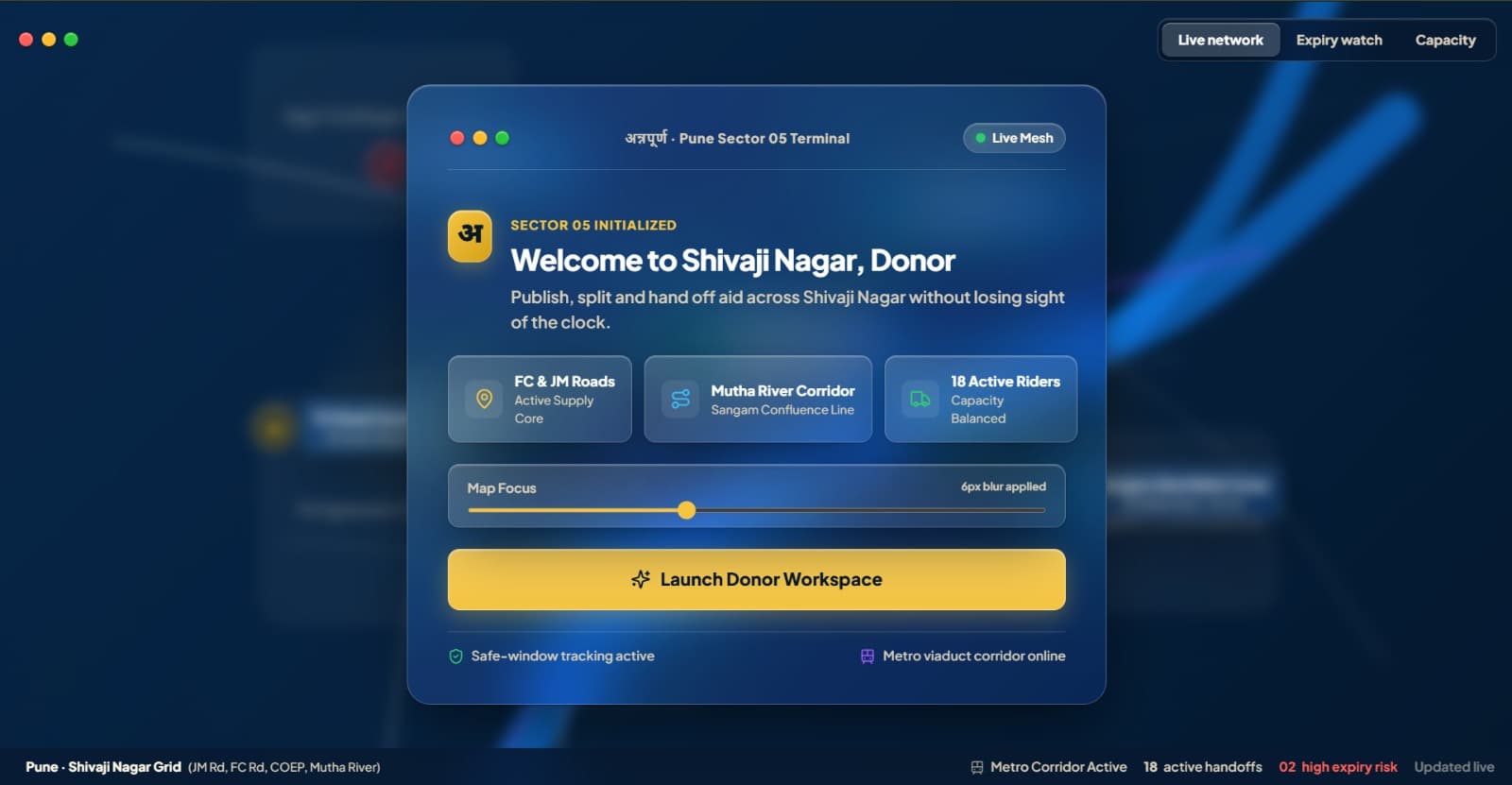
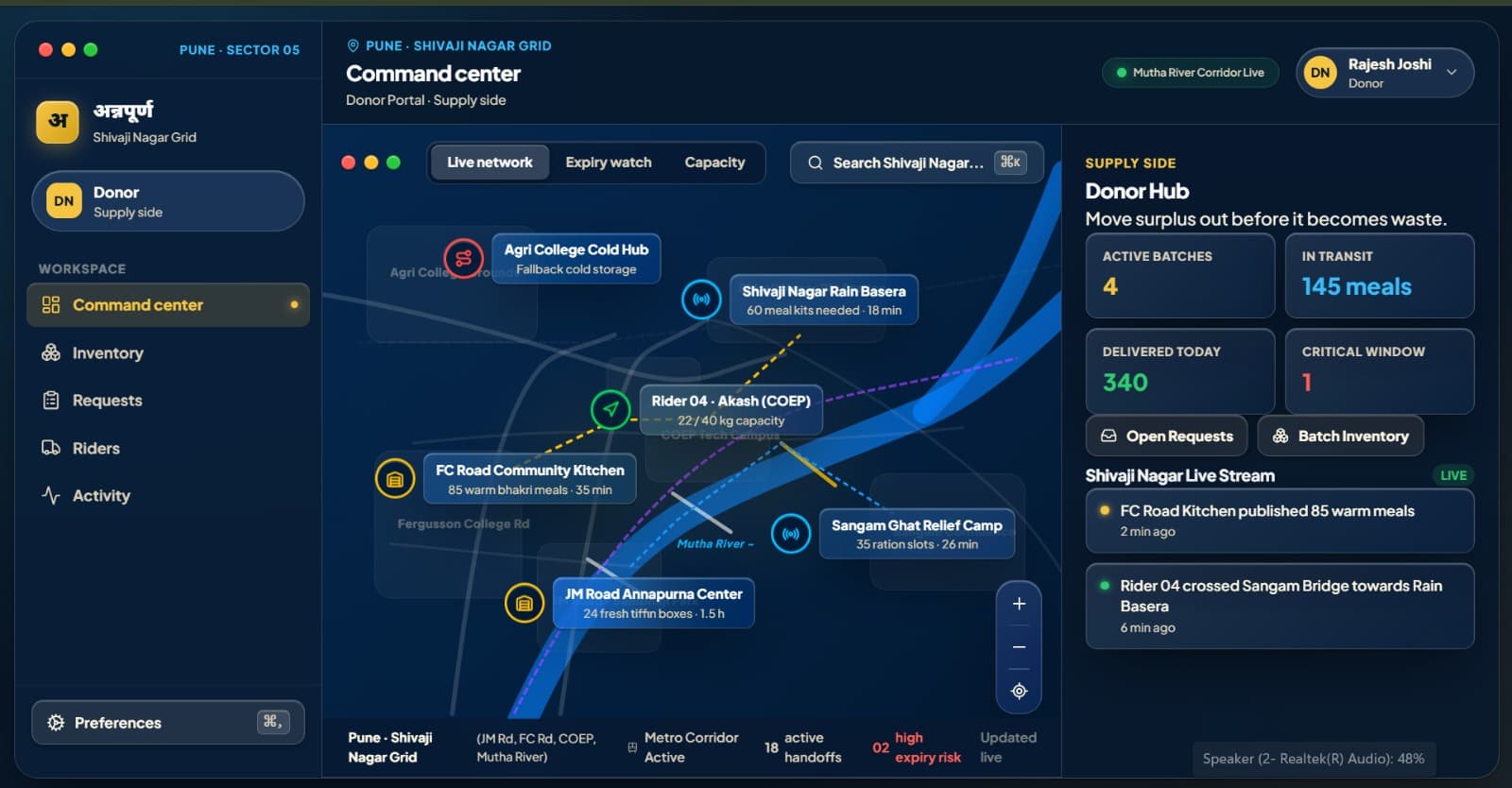
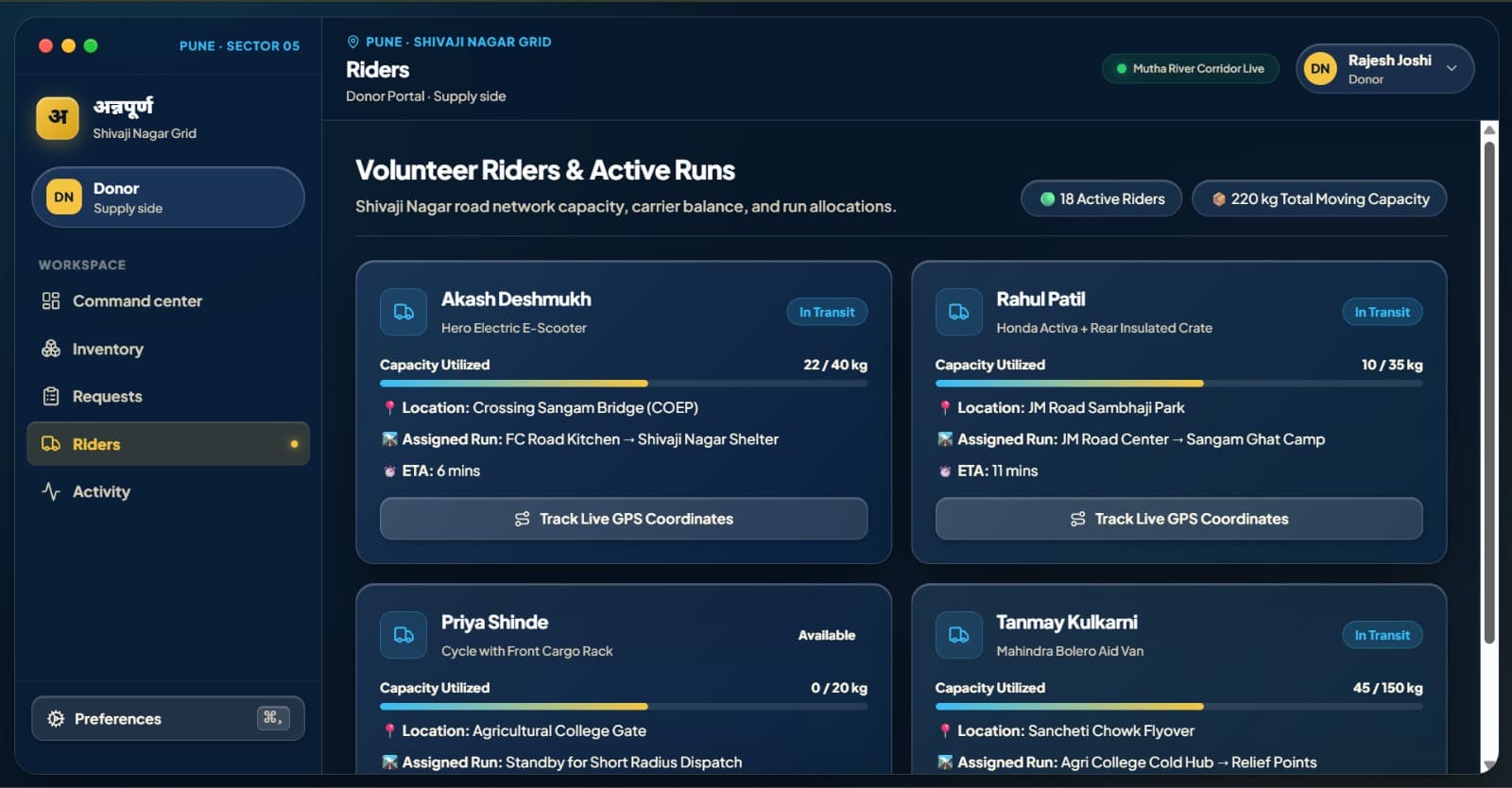
The Clock Is Non-Negotiable: Cooked food spoils within 40–90 minutes in Indian weather. Delays in finding riders or confirming shelter space result in total spoilage. Capacity Mismatches: A single donation of 100 kg cannot fit onto a volunteer's two-wheeler, while a shelter with 30 residents cannot absorb 150 meals. Ghost Reservations & Unresponsive Handoffs: A volunteer accepts a pickup but gets stalled in traffic; without automated recovery, the food expires on the curb. Incompatible Deliveries: Shelters lacking clean water or cooking gas receive raw grains or uncooked rations they cannot process. 💡 Key Innovations & How It Works ⏳ Time-Decay & Expiry-Aware Routing: Every published batch has an active countdown based on thermal conditions and preparation time. If transit time threatens the safe consumption window, the system flags the batch and reroutes it to the nearest immediate intake point or cold-storage hub. ⚖️ Capacity-Aware Multi-Rider Splitting: Automatically breaks oversized bulk donations into manageable sub-batches balanced across multiple transport modes (e-scooters, bicycles, and cargo vans). 🔄 Dynamic Rerouting & Fallback Hubs: If a target shelter reaches capacity while aid is en route, shipments are dynamically diverted to designated regional facilities (such as the Agricultural College Cold Storage Hub in Shivaji Nagar). 🛡️ Capability & Allergen Screening: Recipient shelters register certified infrastructure (refrigeration, potable water, commercial reheating). Incompatible shipments are prevented before dispatch. 🖥️ Apple macOS Liquid-Glass Design: Built with translucent glassmorphic surfaces, dynamic ambient lighting, and high-contrast typography for emergency command centers and field operators. 👥 The Four Primary Roles Role Operational Scope Donor (Kitchens, Restaurants, Caterers) Publishes surplus batches with thermal state (Hot, Warm, Ambient), food type, portion weight, and preparation timestamp. Can split batches and track rider arrival. Volunteer Delivery Partner Receives runs matched to their verified vehicle cargo volume. Tracks live turn-by-turn navigation across river crossings and confirms drop-offs. Receiver (Shelters, Rain Baseras, Relief Camps) Broadcasts live meal requirements, logs intake quotas, specifies dietary constraints, and maintains certified storage capabilities. Coordinator / NGO Dispatcher Oversees municipal network telemetry, manages algorithm pairings on the Dispatch Board, and executes 1-click Interventions for at-risk shipments. 📍 Pilot Deployment: Pune (Shivaji Nagar Sector)
The initial deployment is mapped to Pune's key transit and relief corridors:
Supply Corridors: Fergusson College (FC) Road & Jangali Maharaj (JM) Road community kitchens. Demand Centers: Shivaji Nagar Rain Basera (near ST Bus Depot) and Sangam Ghat Relief Camp. Transit Arteries: Sangam Bridge, Dengle Bridge, and Shivaji Bridge crossing the Mutha River, alongside the Pune Metro Aqua Line elevated corridor. Strategic Fallback: Agricultural College Grounds Cold Storage Hub.