 Loops House

AidFlow
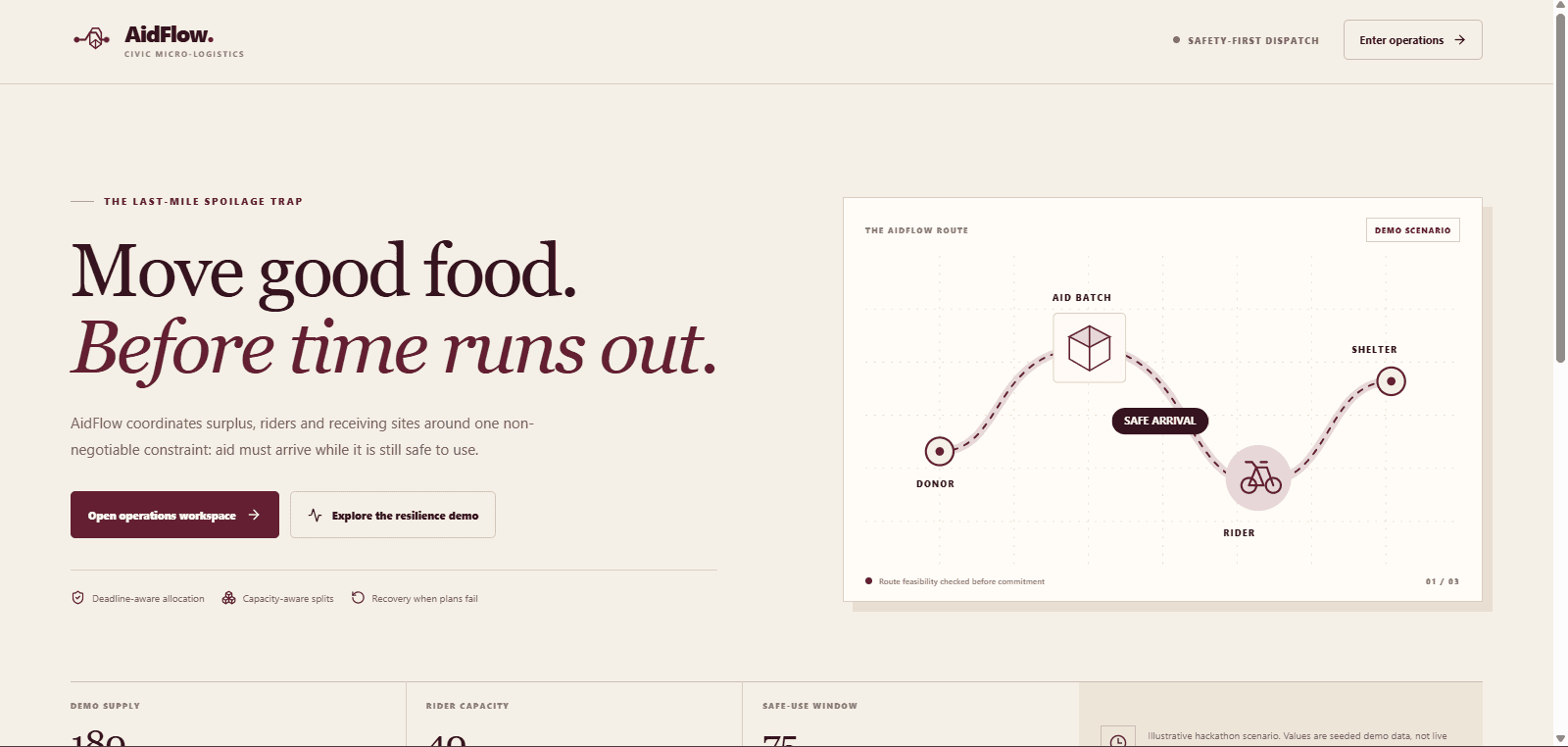
Delivering Hope, Before it expires !

Vibeathon ’26
Links
Team
1 member- HROwner
Hrushikesh Khurade
Overview
AidFlow – Smart Resource Rescue and Distribution Platform
1. Introduction
AidFlow is a digital platform designed to reduce food waste and improve the distribution of essential resources to communities in need. It helps coordinate surplus food, medical supplies, infant formula, ration kits, and other essential supplies by connecting available resources with receiving organizations and shelters.
The platform focuses on making resource distribution more efficient, organized, and time-sensitive by considering factors such as safe-use deadlines, inventory availability, rider capacity, receiving-site demand, and storage requirements.
2. Problem Statement
Large quantities of surplus food and other essential resources can go unused or expire while communities and shelters continue to face shortages. Manual coordination between donors, delivery volunteers, and receiving organizations can lead to delays, wasted resources, inefficient allocation, and missed delivery deadlines.
AidFlow aims to address these challenges through a centralized platform that helps coordinate resources, manage deliveries, and track the distribution process.
3. Objectives
The main objectives of AidFlow are:
- To reduce the wastage of surplus food and essential resources.
- To improve coordination between resource providers, delivery riders, and receiving organizations.
- To prioritize resources according to their safe-use deadlines.
- To allocate resources according to available stock, rider capacity, and receiving-site demand.
- To support the tracking of deliveries from assignment to final disposition.
- To identify operational problems and handle failed or delayed deliveries more systematically.
4. Key Features
4.1 Resource and Batch Management
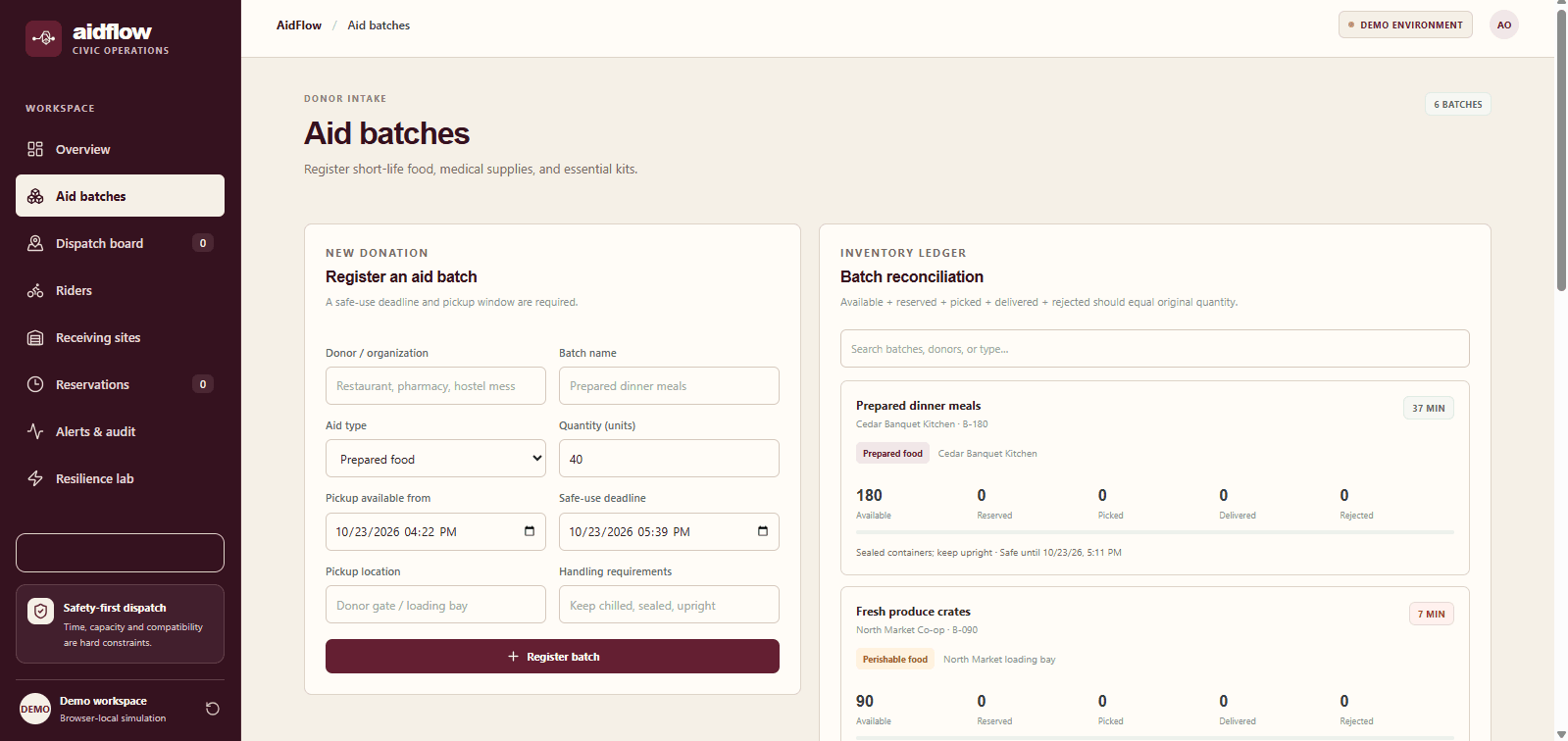
The platform allows users to register and manage different types of aid batches, including prepared food, perishable food, ration kits, medical supplies, infant formula, and essential kits. Batch records can include donor details, quantity, pickup windows, handling instructions, and safe-use deadlines.
4.2 Intelligent Resource Allocation
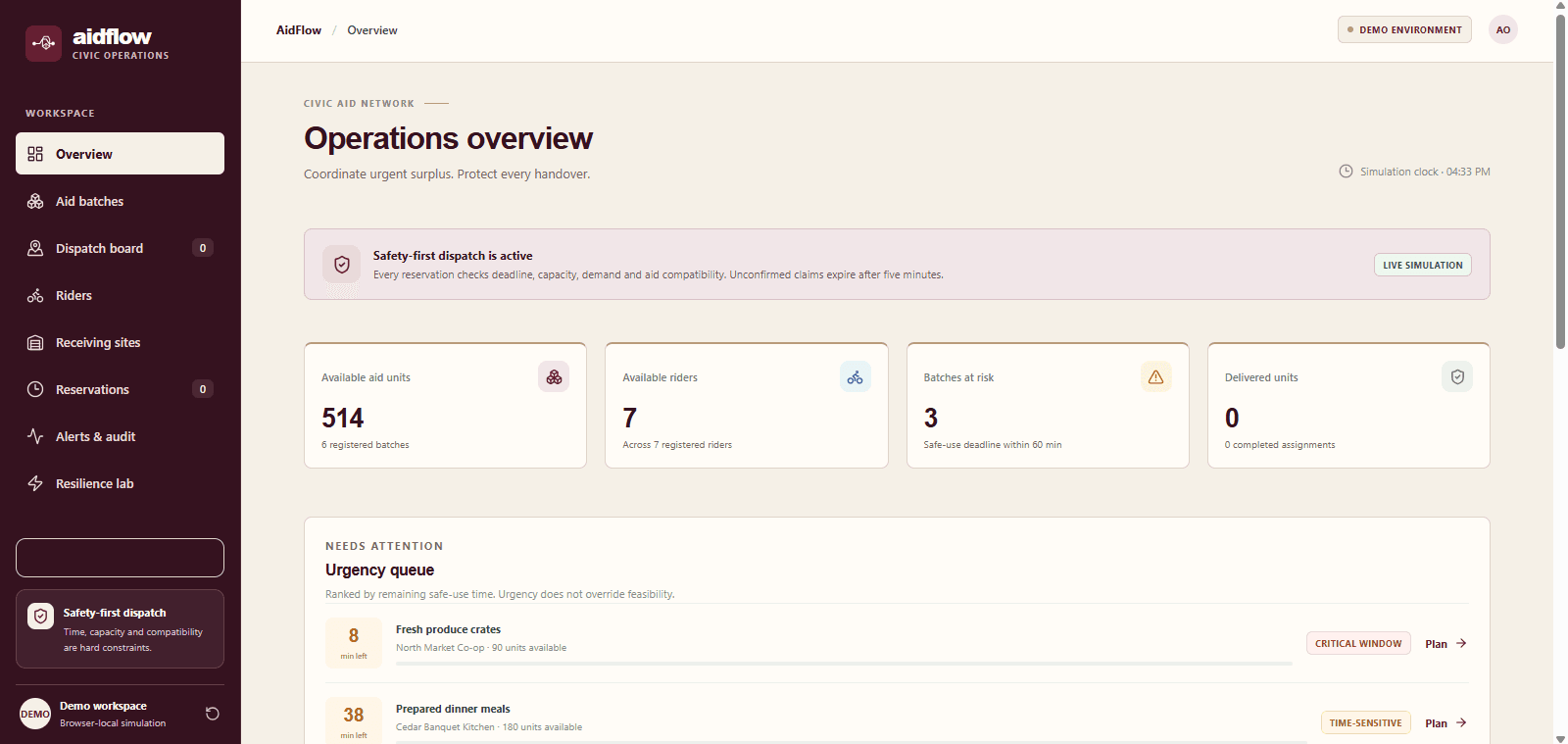
AidFlow uses constraint-aware allocation logic to evaluate whether a delivery can be completed safely and feasibly. It considers available inventory, remaining rider capacity, receiving-site demand, resource compatibility, pickup timing, estimated travel time, and safety buffers before allocating resources.
4.3 Split Delivery Management
When a single rider cannot carry an entire batch, the platform supports splitting the allocation across multiple riders and receiving sites. This helps prevent allocations from exceeding available stock, delivery capacity, or receiving-site requirements.
4.4 Rider Management
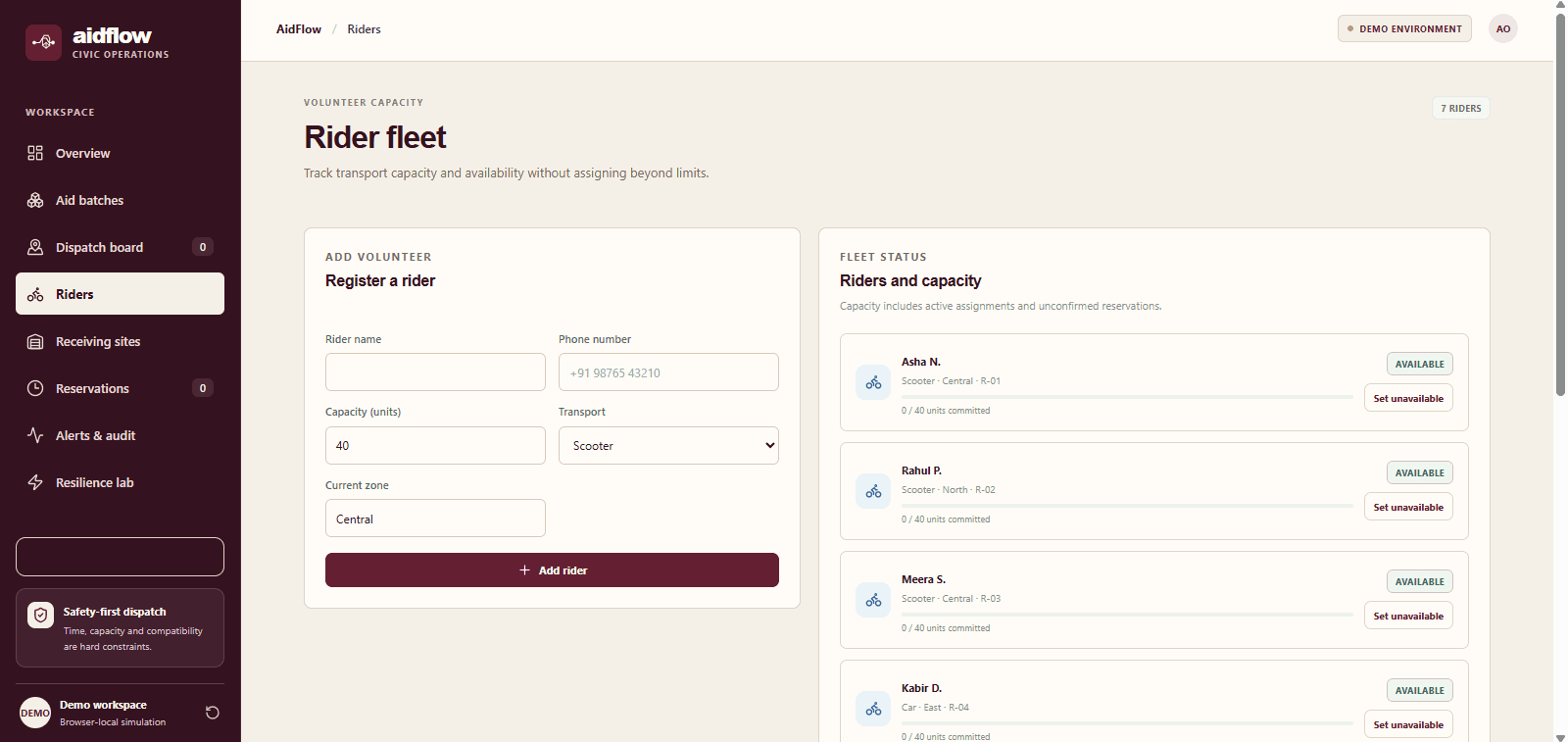
The platform supports registering delivery riders, recording contact information and carrying capacity, and managing rider availability. This information helps coordinate dispatch assignments according to operational requirements.
4.5 Receiving-Site Management
AidFlow maintains information about receiving organizations and shelters, including their demand and operational status. This helps ensure that resources are directed toward destinations that can receive and use them appropriately.
4.6 Reservation Management
The platform includes temporary reservations to prevent the same resources from being allocated multiple times. Pending reservations expire after five minutes if they are not confirmed, allowing the reserved quantity to be released.
4.7 Delivery Lifecycle Tracking
AidFlow supports multiple stages of a delivery, including reservation confirmation, pickup, transit, successful delivery, cancellation before pickup, failure, rerouting review, escalation, and final spoiled or rejected disposition.
This lifecycle helps maintain visibility into the status of each assignment.
4.8 Resource Compatibility and Safety Constraints
The platform considers recorded handling and storage requirements. For example, perishable food and medical supplies may require cold-chain storage, while raw ration kits and infant formula may require recorded access to clean water and cooking fuel.
These checks help identify incompatible delivery arrangements. They do not replace professional food-safety assessments or medical and regulatory compliance checks.
4.9 Operational Alerts and Audit Trail
The platform includes operational alerts and an audit trail to support the review of important activities and exceptions. These features help operators identify problems and understand the history of resource allocation and delivery operations.
4.10 Resilience Testing Lab
AidFlow includes demonstration scenarios for challenging operational situations, such as urgent expiry, limited rider capacity, unresponsive volunteers, receiving-site closures, changing demand, and missing resources.
These scenarios demonstrate how the platform's allocation rules respond to constraints and unexpected changes.
5. How AidFlow Works
The general workflow of the platform is as follows:
- A resource provider's available food or essential supplies are recorded as an aid batch.
- The system evaluates the batch's quantity, safe-use deadline, handling requirements, and pickup window.
- Available riders and suitable receiving sites are assessed according to capacity, demand, and compatibility.
- Resources are allocated to feasible delivery assignments, with large batches split when necessary.
- Reservations are confirmed and resources move through the delivery lifecycle.
- The delivery status is updated as resources are picked up, transported, delivered, or escalated for review.
- Operators can review alerts, inspect the assignment history, and respond to exceptional situations.
6. Technology and Implementation
AidFlow is built as a web-based application using React and Vite for the frontend. Its allocation rules and domain logic are implemented in JavaScript, with automated tests covering important resource-management and delivery scenarios.
The repository also includes an initial Node.js API and PostgreSQL database schema as a foundation for future backend development. However, the current frontend prototype still stores its operational data in the browser's local storage and is not yet connected to the database.
7. Innovation and Impact
AidFlow goes beyond a basic food donation listing platform by considering operational constraints before assigning resources. Its approach combines deadline-aware prioritization, capacity-aware allocation, split deliveries, temporary reservations, resource compatibility checks, and delivery lifecycle management.
The platform has the potential to help food banks, shelters, community organizations, and volunteers coordinate donations more efficiently. By reducing avoidable delays and improving resource utilization, AidFlow aims to contribute to food-waste reduction and more reliable distribution of essential supplies.
8. Future Scope
Future development may include:
- Secure user authentication and role-based access control.
- Integration of the frontend with the PostgreSQL database and backend APIs.
- Live GPS tracking and map-based route planning.
- Automated route optimization based on distance, urgency, and delivery capacity.
- SMS, email, and push notifications for delivery updates.
- Server-side reservation expiry and recovery.
- Analytics for food waste reduction, delivery performance, and resource utilization.
- Integration with verified food banks, shelters, restaurants, and community organizations.
9. Current Limitations
AidFlow is currently a hackathon prototype intended for demonstration and evaluation. Its frontend data is stored locally in the browser, so records are not automatically shared across devices. Secure authentication, backend-enforced authorization, transactional operational APIs, live GPS tracking, and notification integrations have not yet been completed.
Consequently, the prototype should not be used to make real food-safety or medical-distribution decisions.
10. Conclusion
AidFlow aims to transform resource rescue and distribution into a more organized, constraint-aware, and transparent process. By coordinating available resources with receiving-site demand and delivery capacity, the platform demonstrates how digital technology can help reduce waste and improve the distribution of essential supplies.
Project Mission: Move essential resources to the right destination before time runs out.