Touchstone
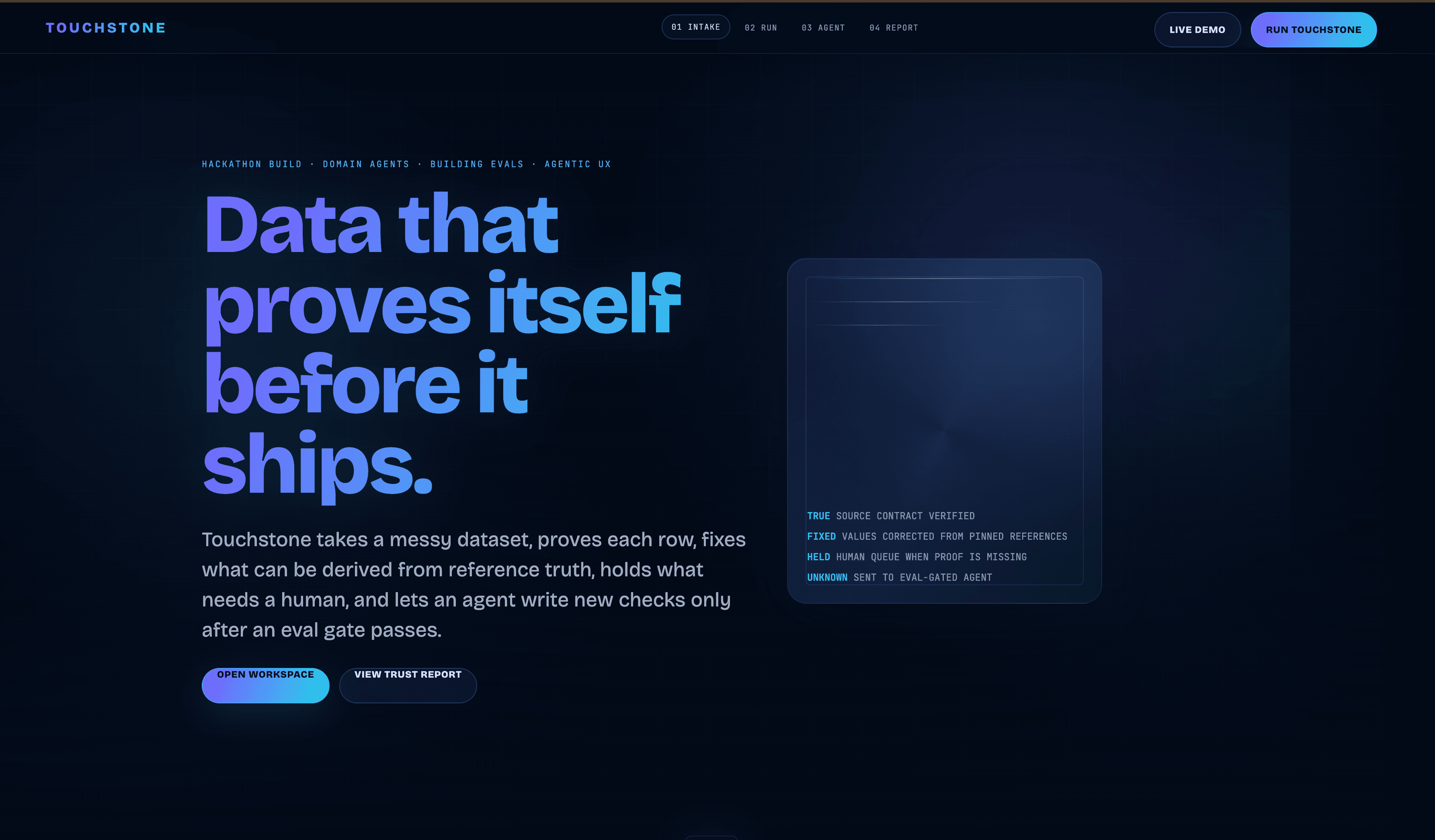
The data lie detector. It proves every number, fixes what's wrong, and writes its own checks when it sees something new.
Links
Additional info
How was your experience building with Codex?
Honestly, really good once I stopped treating it like autocomplete. The thing that clicked for me was that the work moved up a level. Instead of writing every line, I spent my time on the architecture, the data model, and writing a clear AGENTS.md, and then let Codex do the heavy building from that context. When I gave it tight, specific instructions and a real spec to work from, the output was genuinely strong. Where it struggled was when my own ask was vague, so it kind of taught me to think more clearly before I prompted. The biggest shift in how I work is that I now plan and validate way more than I type, and the built in review made it easy to catch things before they shipped.
Describe your experience using Loops House as the hackathon platform. What worked well, what challenges (if any) did you face, and what improvements would you like to see?
Loops House was smooth to get started on. The hackathon specific skill was the standout. Having something that already knew the tracks, the judging, and how to scaffold an idea meant I went from a blank page to a real plan in minutes instead of an hour, and being able to install it straight into the repo was a nice touch. Project ideation, refining, and saving things to artifacts felt natural, and the submission flow with logo, screenshots, repo, and video in one place was clear. If I'm being honest about challenges, I'd have loved a bit more clarity up front on exactly what each submission field expects and how it maps to judging, and a quick way to preview how my submission will actually look to a judge before I lock it in. A built in way to capture a short demo recording would also save a lot of last minute scrambling.
Tell us about your overall experience at Codex Community Hackathon Pune.
Genuinely one of the better events I've been to. The energy in the room was the best part, a mix of people who'd never touched an agentic tool and people going deep, all figuring out the same frontier together. The opening talks set the tone well, especially the framing that this is about orchestrating agents rather than just writing code, and that reframe actually changed how I approached my whole build. Tight timeline, real pressure, but the kind that makes you ship instead of overthink. I walked out having built something I'm proud of and with a much clearer picture of where software is heading.
What could Codex Community improve to create a better experience for participants?
A few small things would go a long way. A short hands on Codex warm up at the beginning for the people who've never used it, since the room had a real range of experience levels. A little more time, or a clearer minute by minute schedule for the day, would help people pace themselves. None of these are dealbreakers, the event was great, these are just the things that would take it from great to seamless.
Team
2 members- KR
Krish Oswal
- PROwner
Priyanka Bana
Overview
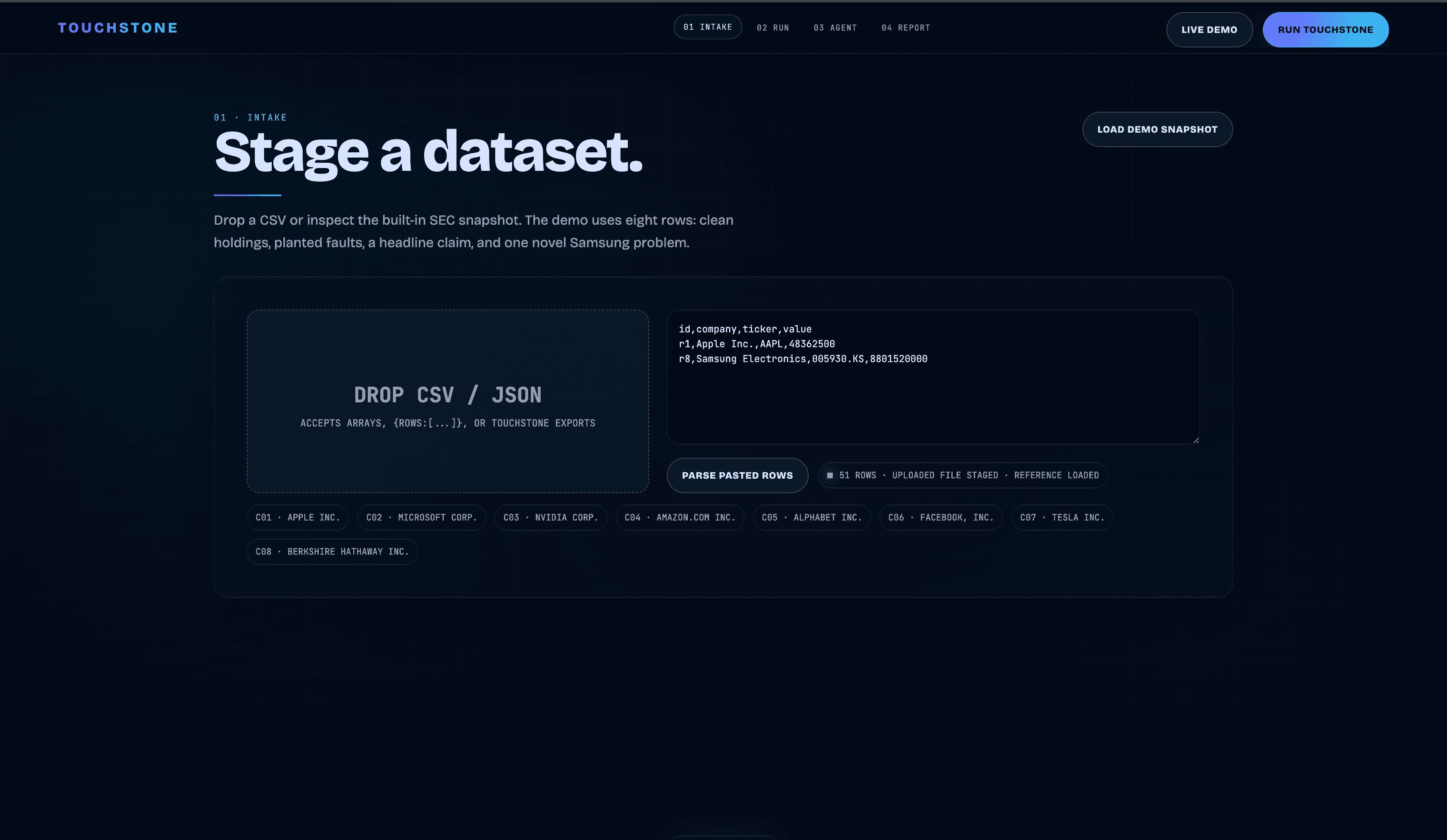
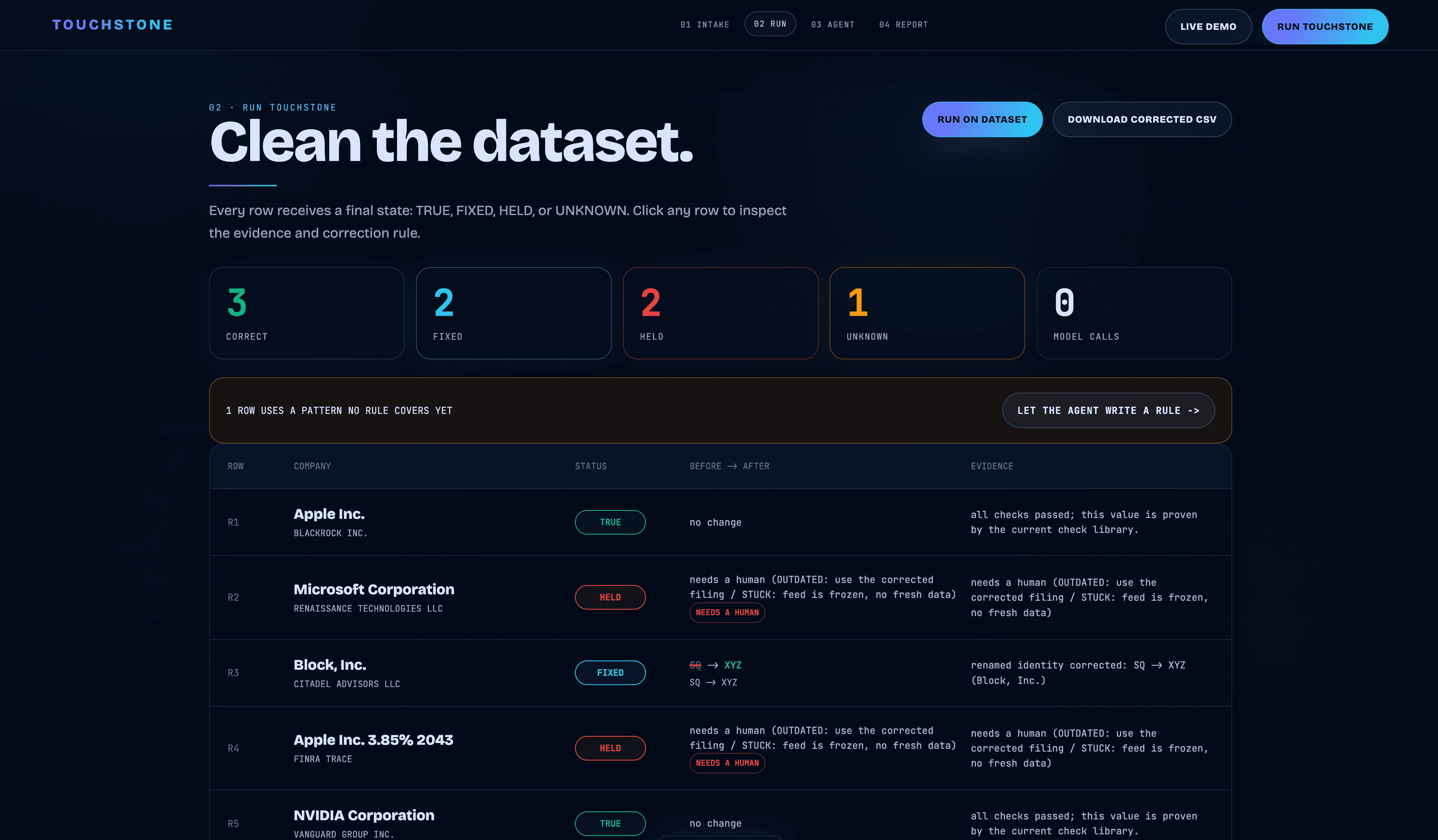
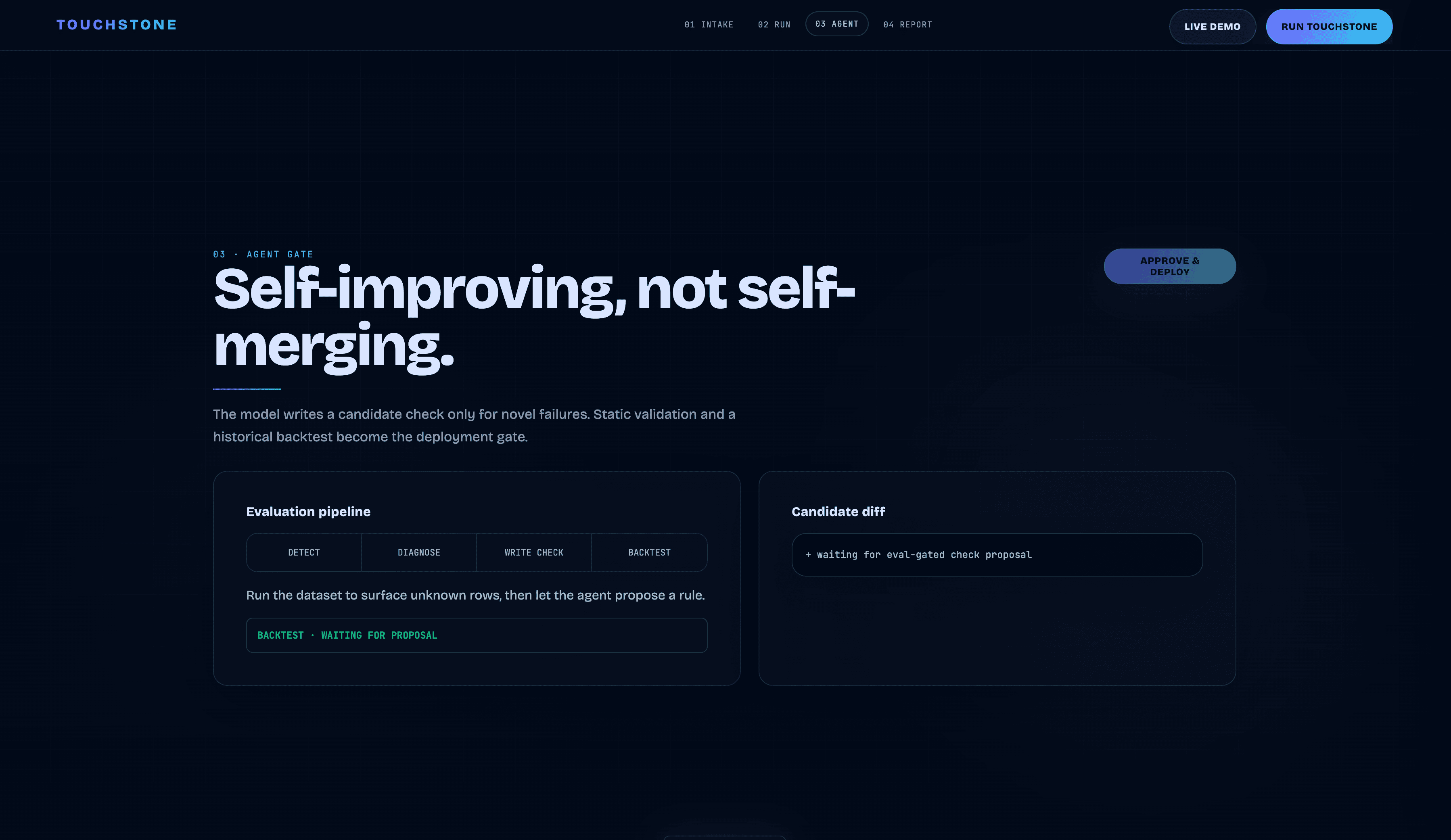
Touchstone is a verification agent for anyone who works with data they can't fully trust, like analysts, finance teams, or anyone staring at a dashboard that's green but might be lying. The problem is that a pipeline turns green the moment data arrives, even when that data is wrong. It might be outdated, mislabeled, frozen, in the wrong currency, or just an unproven claim. Touchstone makes every value prove that it's true. It recomputes the number from a trusted source, resolves what it actually refers to, and checks it for corrections and freshness. Each value comes back as TRUE, or it gets auto fixed when Touchstone can prove the right answer (and it shows you exactly what it changed and why), or it's HELD and flagged for a human when there's no safe way to correct it. And when something shows up that no existing rule can explain, an agent steps in, works out the cause, writes a brand new check in Python, tests that check against past data to make sure it actually works, and waits for a person to approve it before trusting it. You hand Touchstone a messy dataset and it hands back clean, verified data along with a report of everything it fixed. It runs on real SEC filings with real companies, and the errors are planted on purpose and logged in the open, because you can't show that you catch lies unless you put some lies in front of it.