ReleasePilot
AI release readiness manager that analyzes code changes, CI, risks, blast radius, and rollback plans before production.
Additional info
How was your experience building with Codex?
Building with Codex was fast and productive. It helped me move from idea to working MVP quickly by planning the product, writing backend and frontend code, improving the UI, adding GitHub/GitLab integrations, OpenAI support, PDF export, persistence, and tests. The best part was using Codex like an engineering partner: I could describe product goals in plain language, then iterate on real code, fix issues, and harden the app.
Describe your experience using Loops House as the hackathon platform. What worked well, what challenges (if any) did you face, and what improvements would you like to see?
Loops House made the submission process clear and focused. The project flow helped me think through the idea, pitch, description, and hackathon positioning. What worked well was having one place for project details and submission materials. A useful improvement would be more examples of strong project submissions, especially for pitch, demo video, and judging alignment, so builders can benchmark their entries more easily.
Tell us about your overall experience at Codex Community Hackathon Pune.
The hackathon experience was inspiring and hands-on. It pushed me to think beyond a simple app and build something closer to a real product. ReleasePilot started as an idea for AI-assisted release management and became a working tool with repository analysis, risk agents, readiness scoring, blast-radius visualization, and PDF reports. Overall, it was a great environment to explore agentic coding and see how AI can help developers build faster and more thoughtfully.
What could Codex Community improve to create a better experience for participants?
Codex Community could improve the participant experience by sharing more example submissions, demo video templates, and judging rubrics before the hackathon starts. It would also help to have clearer milestone checkpoints during the event, such as idea validation, MVP review, demo polish, and final submission review. For first-time builders, a short starter guide on how to use Codex effectively for planning, coding, debugging, and polishing would be very useful. A dedicated mentor feedback window before submission would also help teams improve their projects before judging.
Team
1 member- GAOwner
Gaurang Kudale
Overview
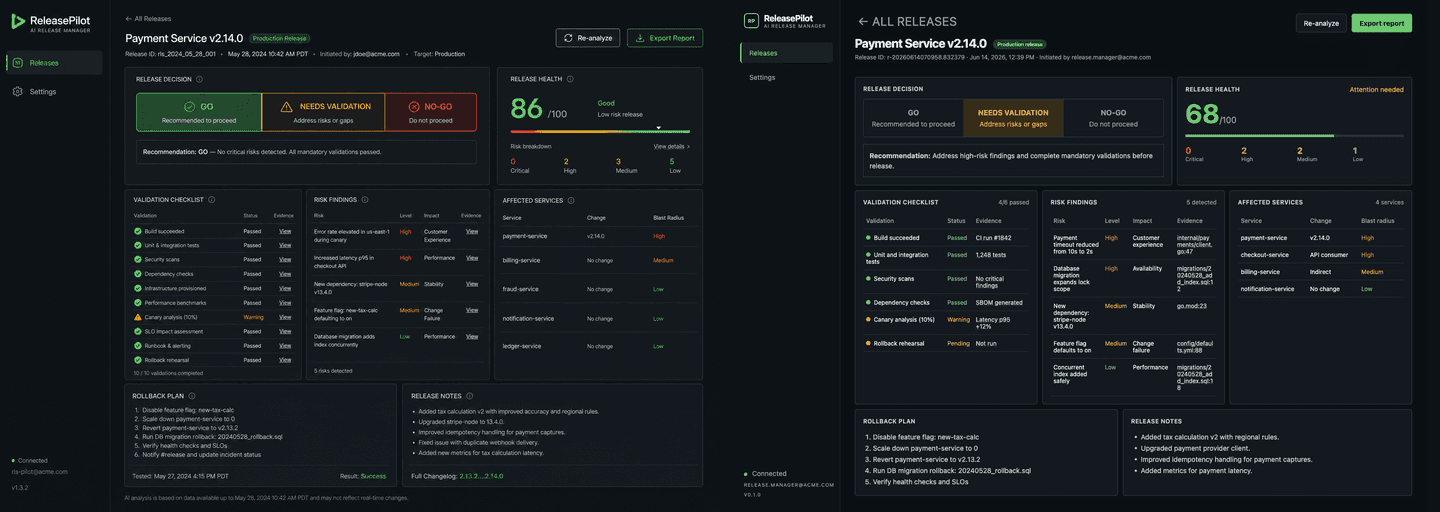
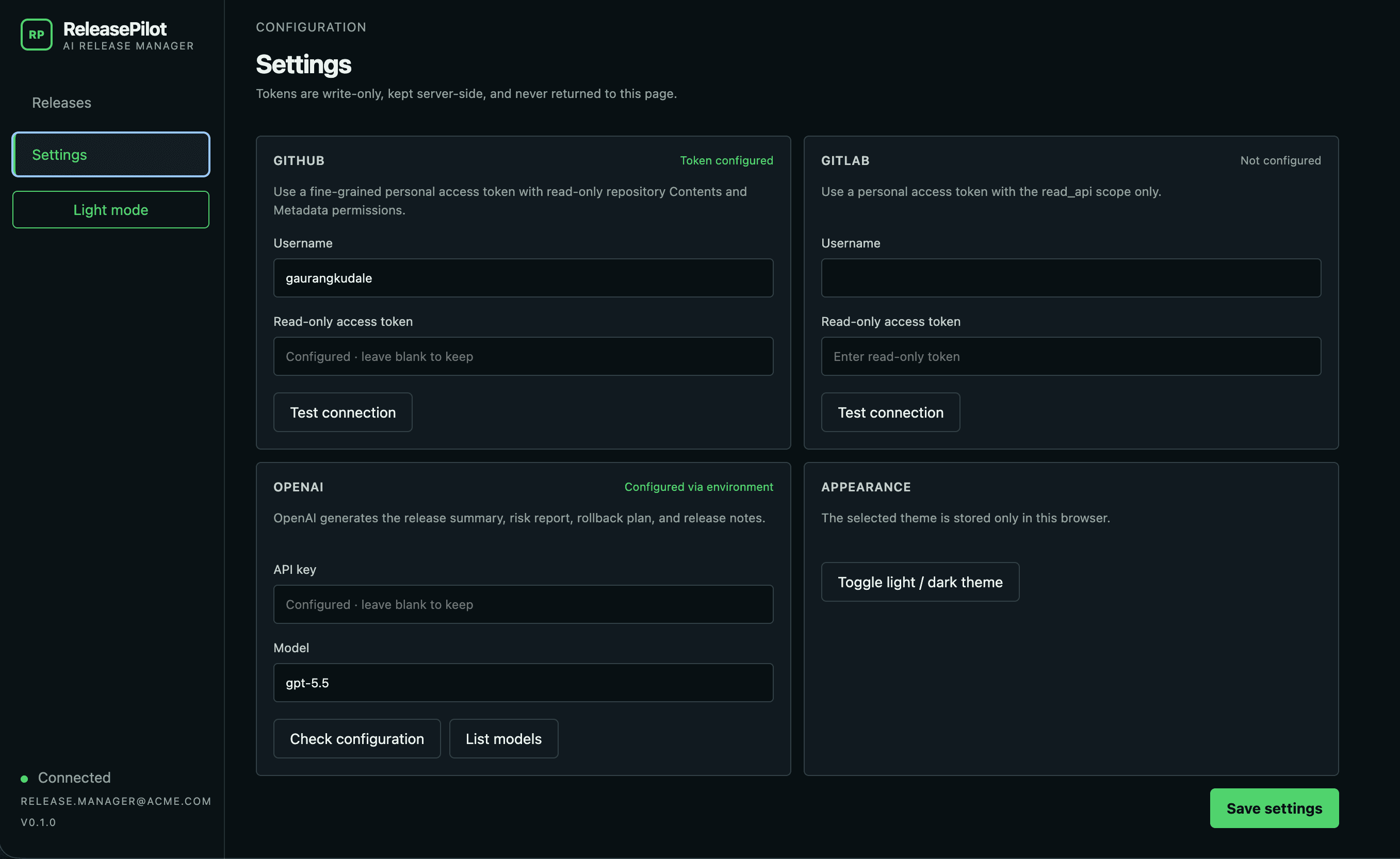
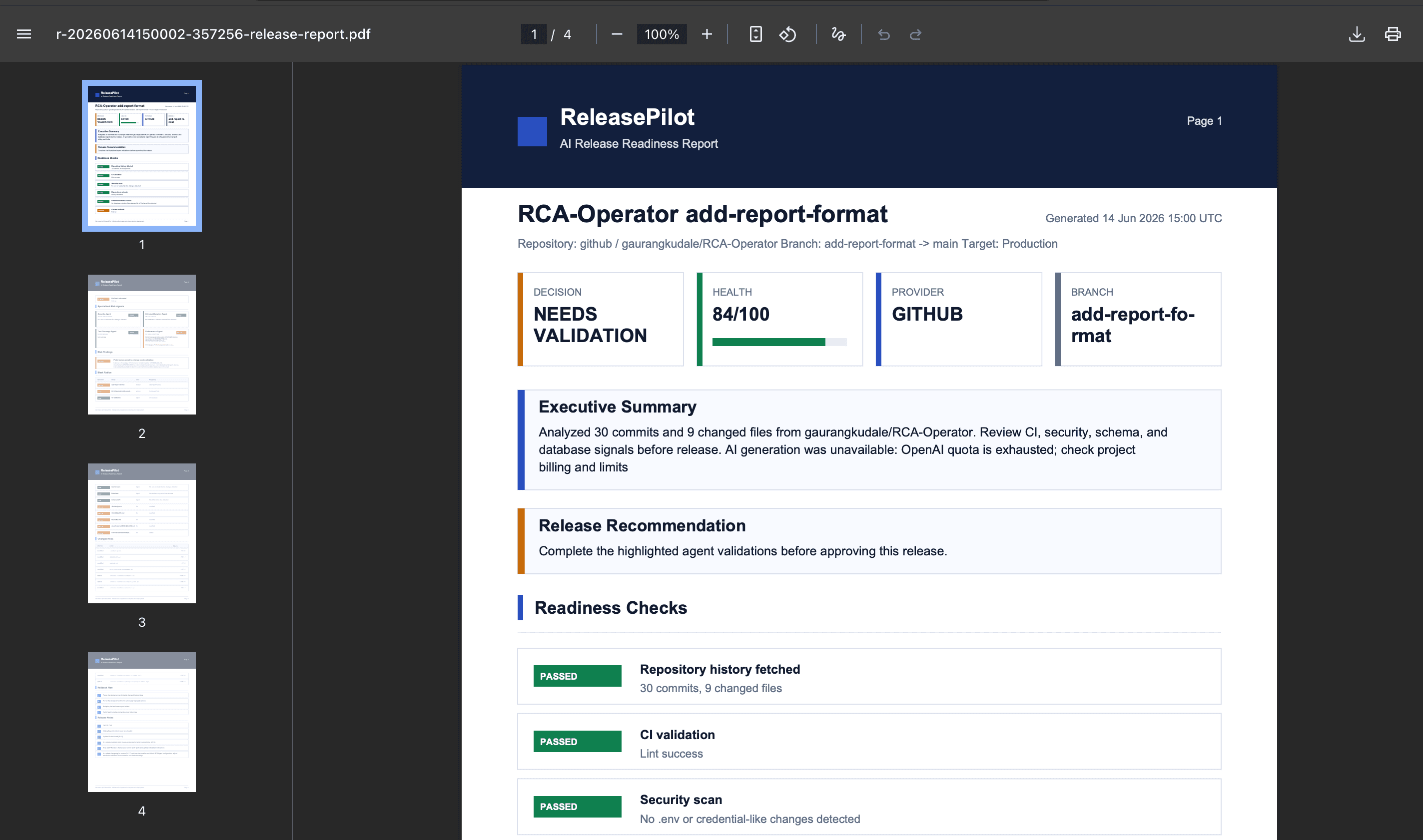
ReleasePilot is an AI-powered release manager for engineering teams shipping monoliths and microservices. It helps release managers, platform engineers, tech leads, DevOps teams, and SREs understand whether a release is safe to deploy. The app connects to GitHub and GitLab using read-only tokens, fetches repository history, analyzes commits and changed files, checks CI status, scans for .env or credential-like changes, detects database/schema/API contract changes, and produces a release readiness score. It also runs specialized risk-agent checks for security, schema/migrations, CI/test coverage, and performance-sensitive changes. ReleasePilot turns these signals into a practical GO / NEEDS VALIDATION / NO-GO decision, shows affected services and blast radius, generates release notes and rollback plans, persists local reports, and exports a polished PDF release report.