Loops House


Pramanik
India has a follow-up problem. Complaints don’t fix themselves. Our autonomous voice agents call responsible officers, track promises, and publish progress and evidence on a public dashboard for everyone to inspect and verify.
Event
DevDay Exchange Community Metro Hackathon: Pune
Award
Winner — Open AI
3rd Prize
Links
Team
1 member- YAOwner
Yash Sonalekar
Overview
Pramanik - An open AI accountability office powered by autonomous voice agents.
- Complaints don’t fix themselves. Citizens report civic problems, but chasing officers and checking the outcome still takes time and effort. Pramanik automates that follow-through.
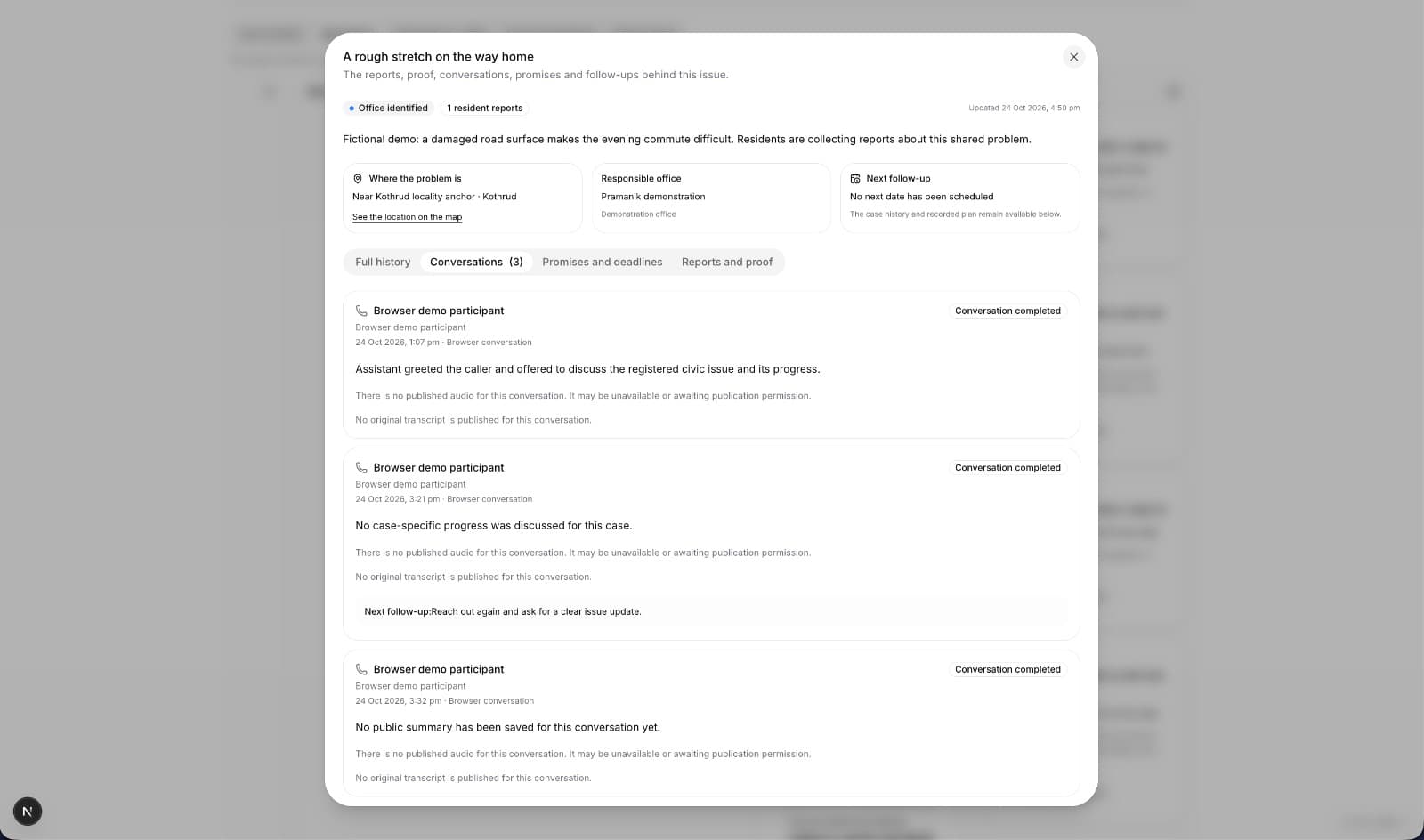
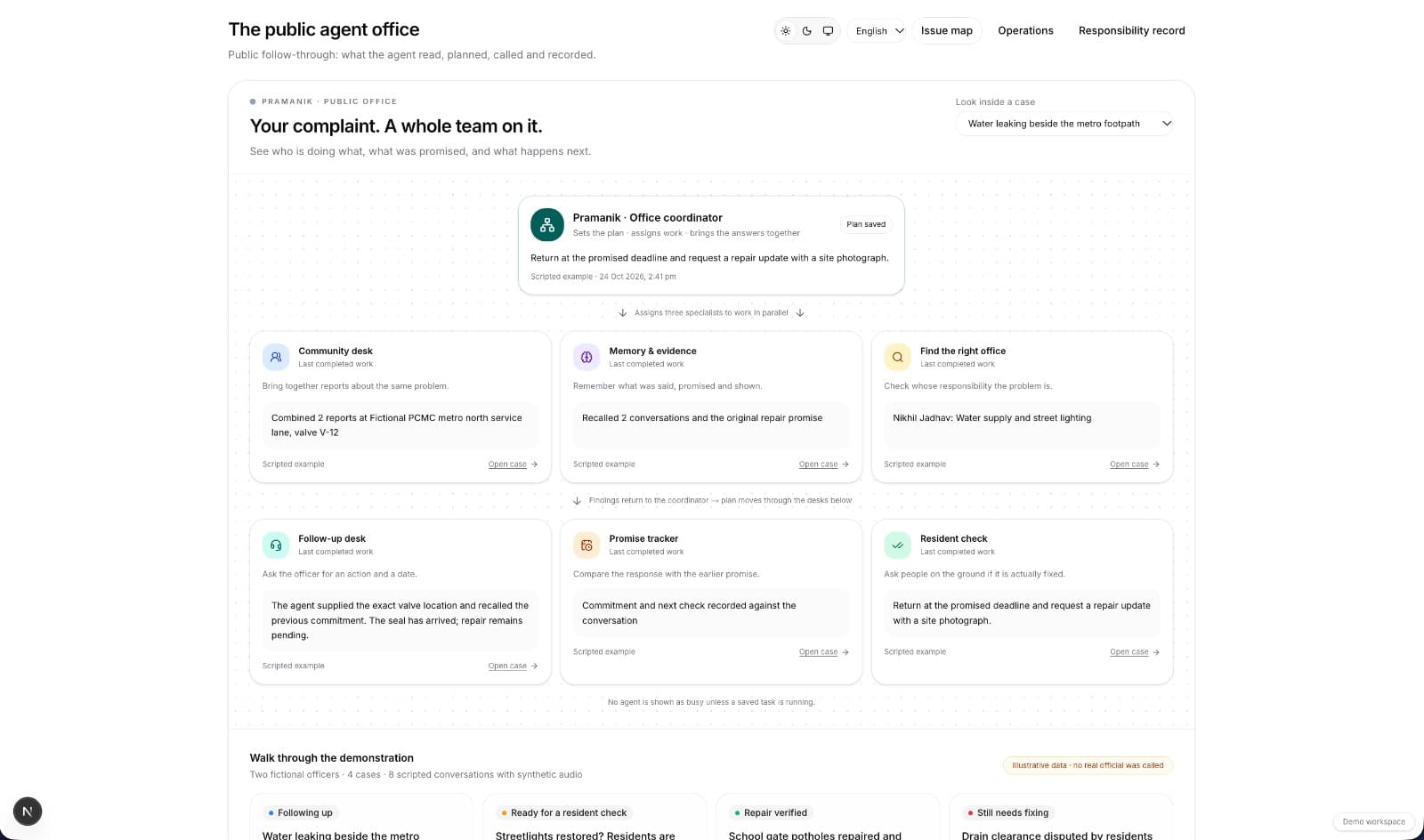
- One issue, shared context. AI agents aggregate related complaints and bring resident reports, photos, previous conversations, and officer commitments into a shared case dossier.
- Coordinated AI teamwork. Built with the OpenAI Agents SDK and GPT-5.4 mini, specialist agents review reports, history, and responsibility. A coordinator turns their findings into an action plan.
- Voice agents that ask for action. A GPT-Realtime-2.1 voice agent, connected through Bolna, calls the designated contact, asks informed questions, revisits previous promises, and requests clear deadlines.
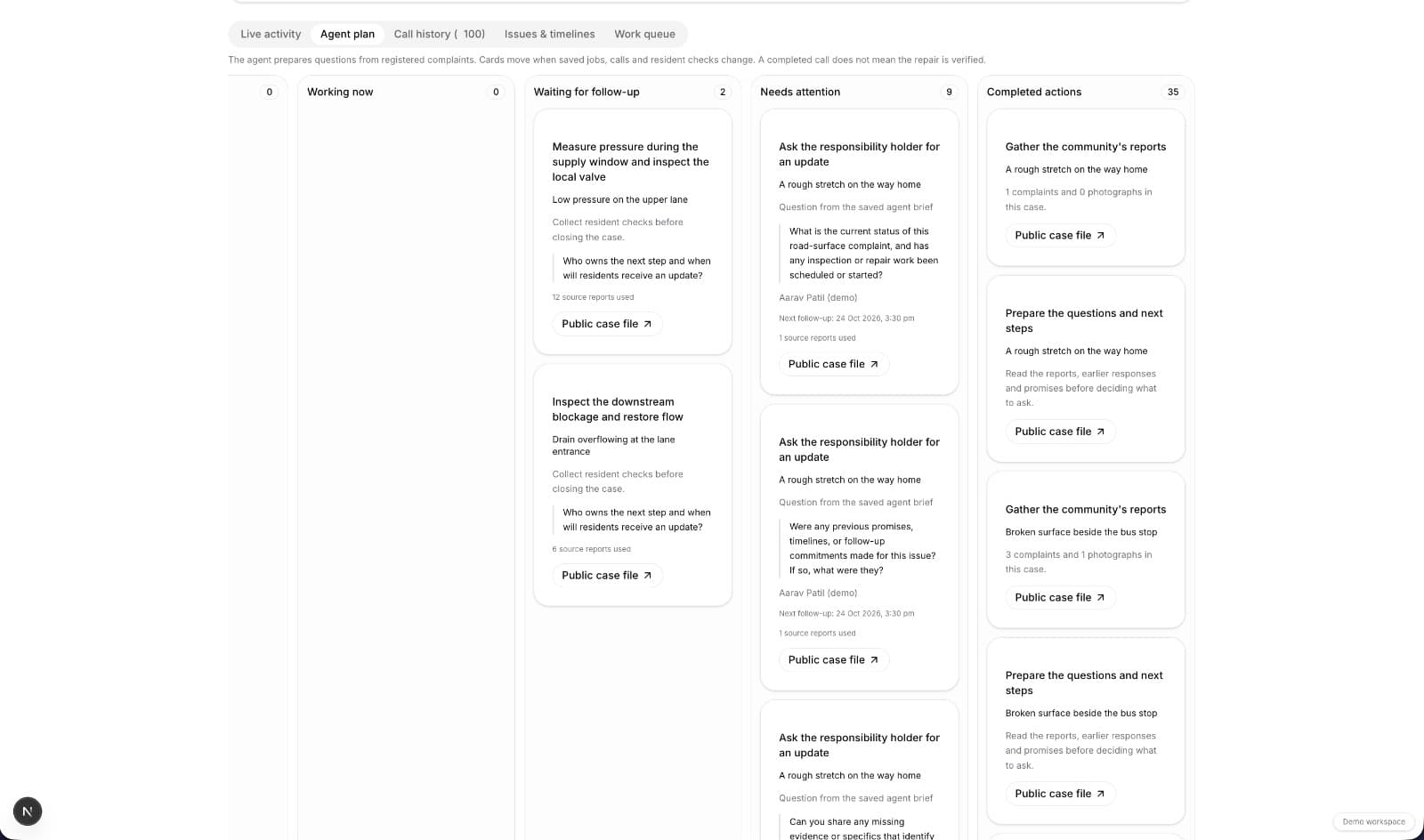
- Follow-ups that continue after the call. Through tool calling and persistent background jobs, agents save commitments, update case records, and schedule the next follow-up.
- “Done” needs a ground check. Completion claims open a public survey where residents submit observations and photos. GPT-powered visual assessment supports human review, and conflicting evidence keeps the case open.
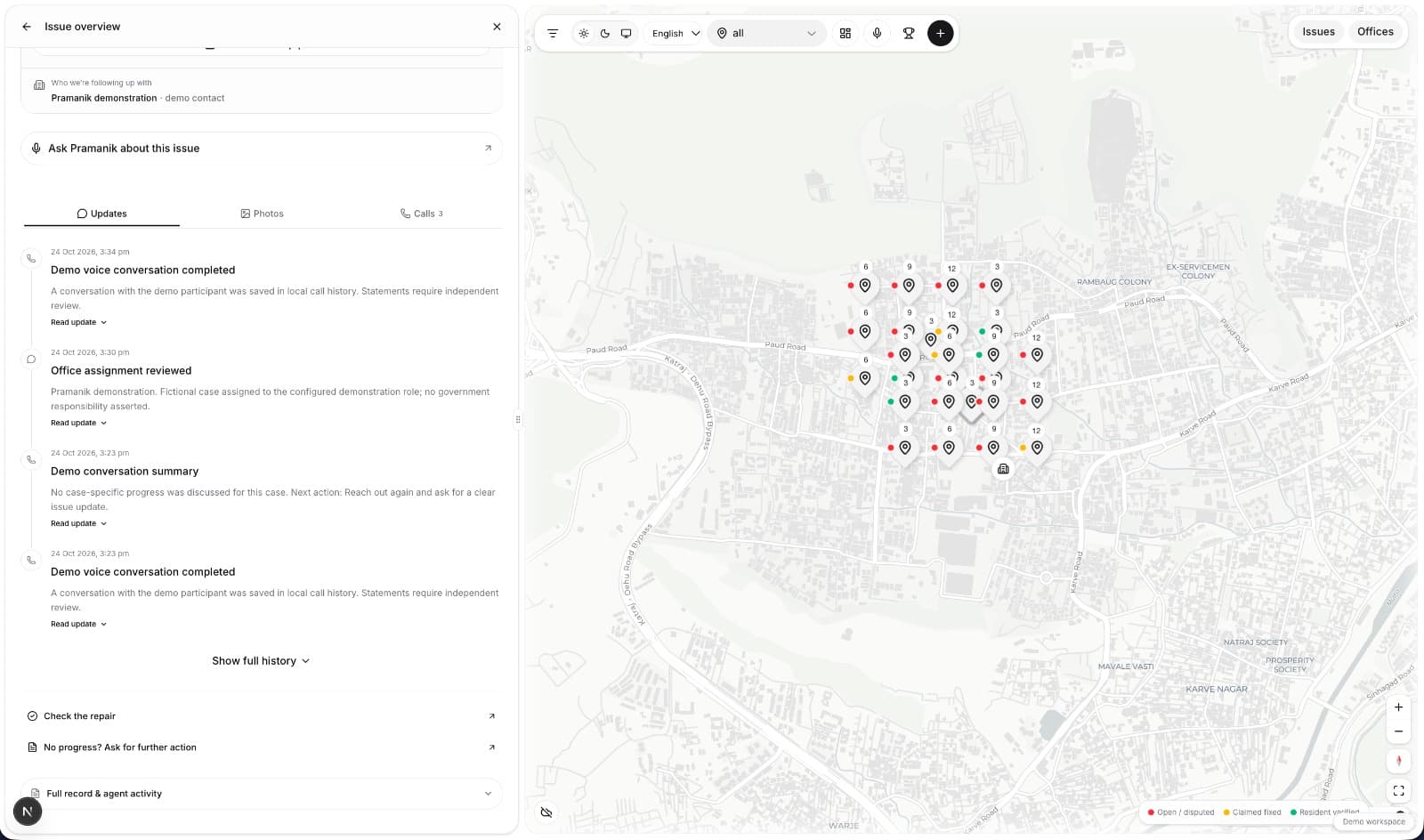
- Accountability everyone can inspect. A public Kanban board, case dossier, and activity summary show published conversation records, promises, evidence, completed actions, and next steps.
- Less chasing, more community participation. Residents can add issues, contribute evidence, and check progress together—making public-service commitments easier to question and verify.