 Loops House
JalDrishti
Detect. Trace. Attribute.
DevDay Exchange Community Metro Hackathon: Pune
Team
1 member- ANOwner
Anuja Pawar
Overview
When an oil spill occurs in the ocean, satellite systems can easily show where the oil is right now, but they fail to answer the most critical question: "Who dumped it, and where is the proof?" Over 60% of ocean spills are intentional—ships dump toxic bilge waste at night, disable their transponders to become "ghost ships", and rely on ocean currents to carry the slick miles away from the crime scene before satellites detect it.
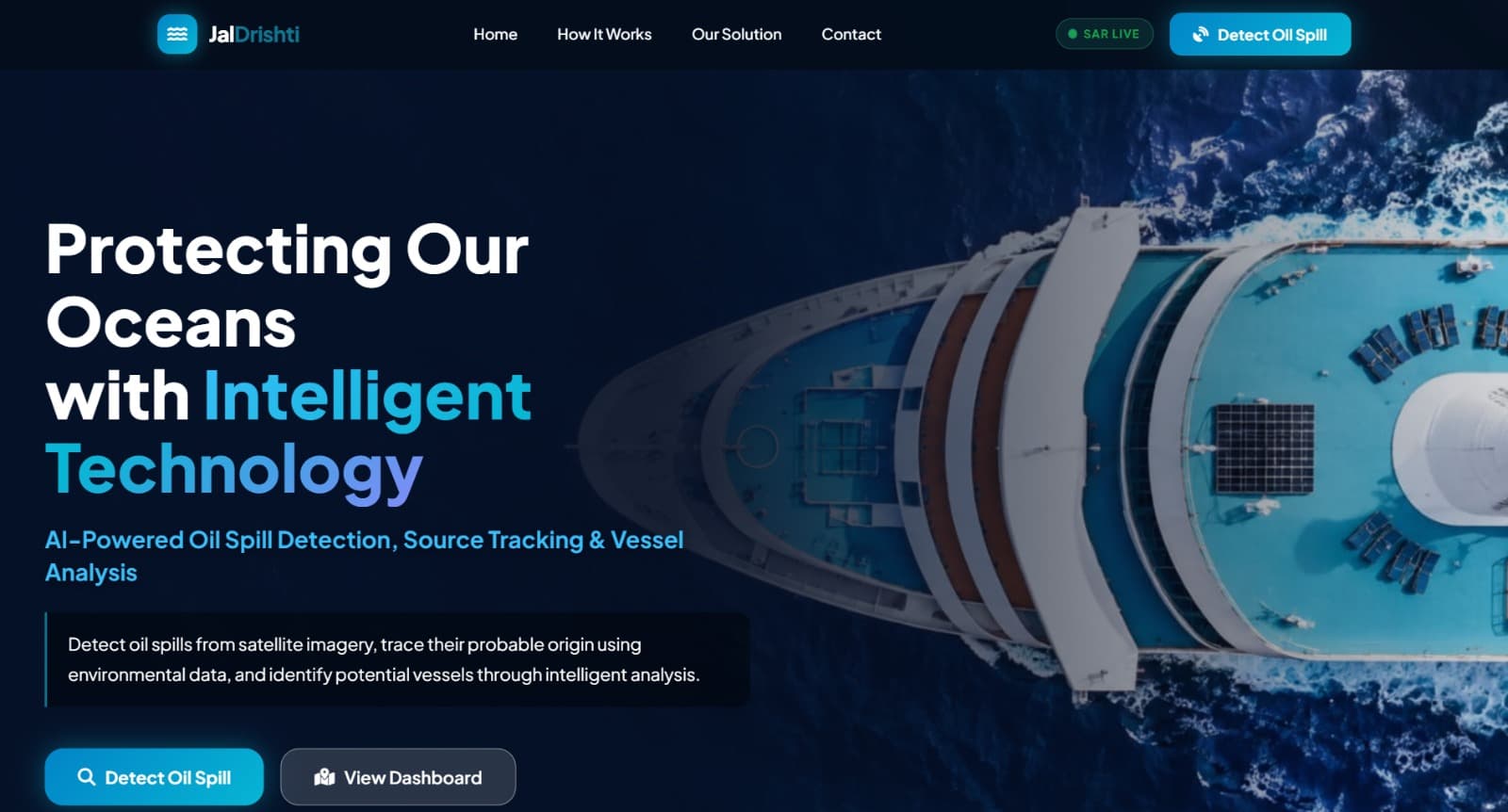
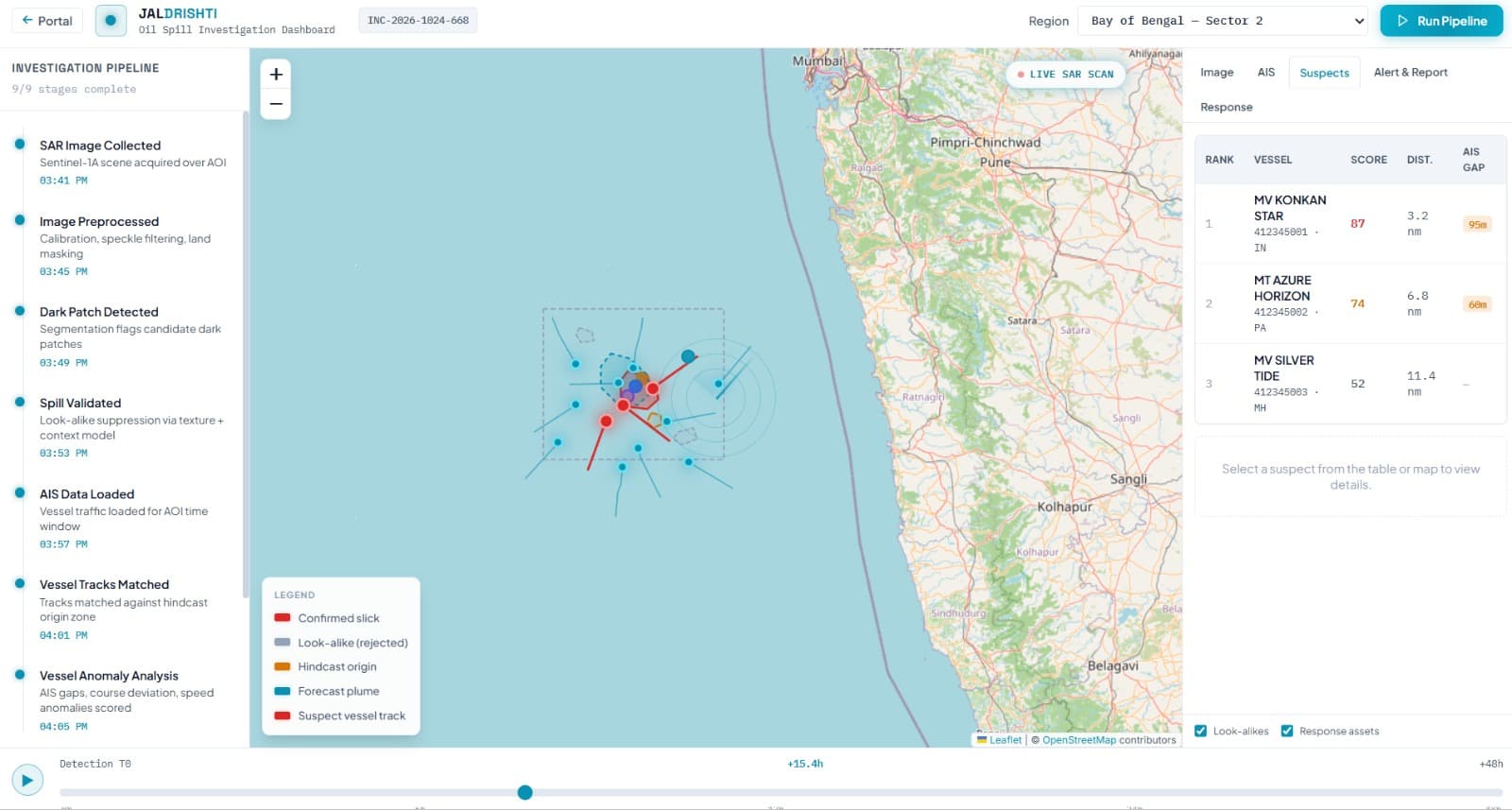
The JalDrishti Innovation:- JalDrishti does not just monitor the spill—it catches the culprit. It is an AI-powered maritime intelligence platform that fuses spaceborne radar computer vision, reverse hydrodynamic drift modeling, and live AIS ship tracking to trace an oil spill backward in time and attribute it directly to the offending vessel.
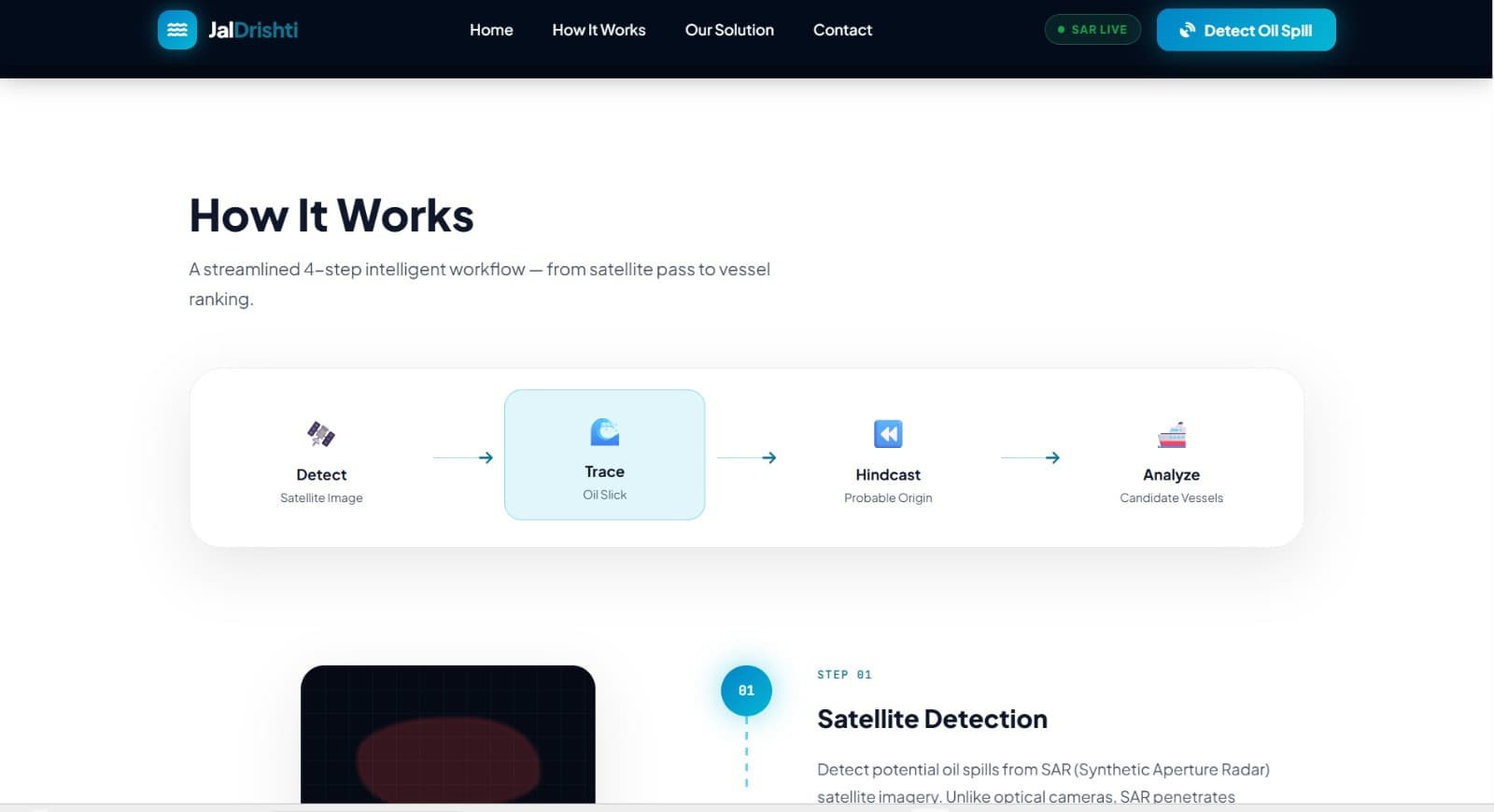
How It Works (The 3-Step Forensic Chain):
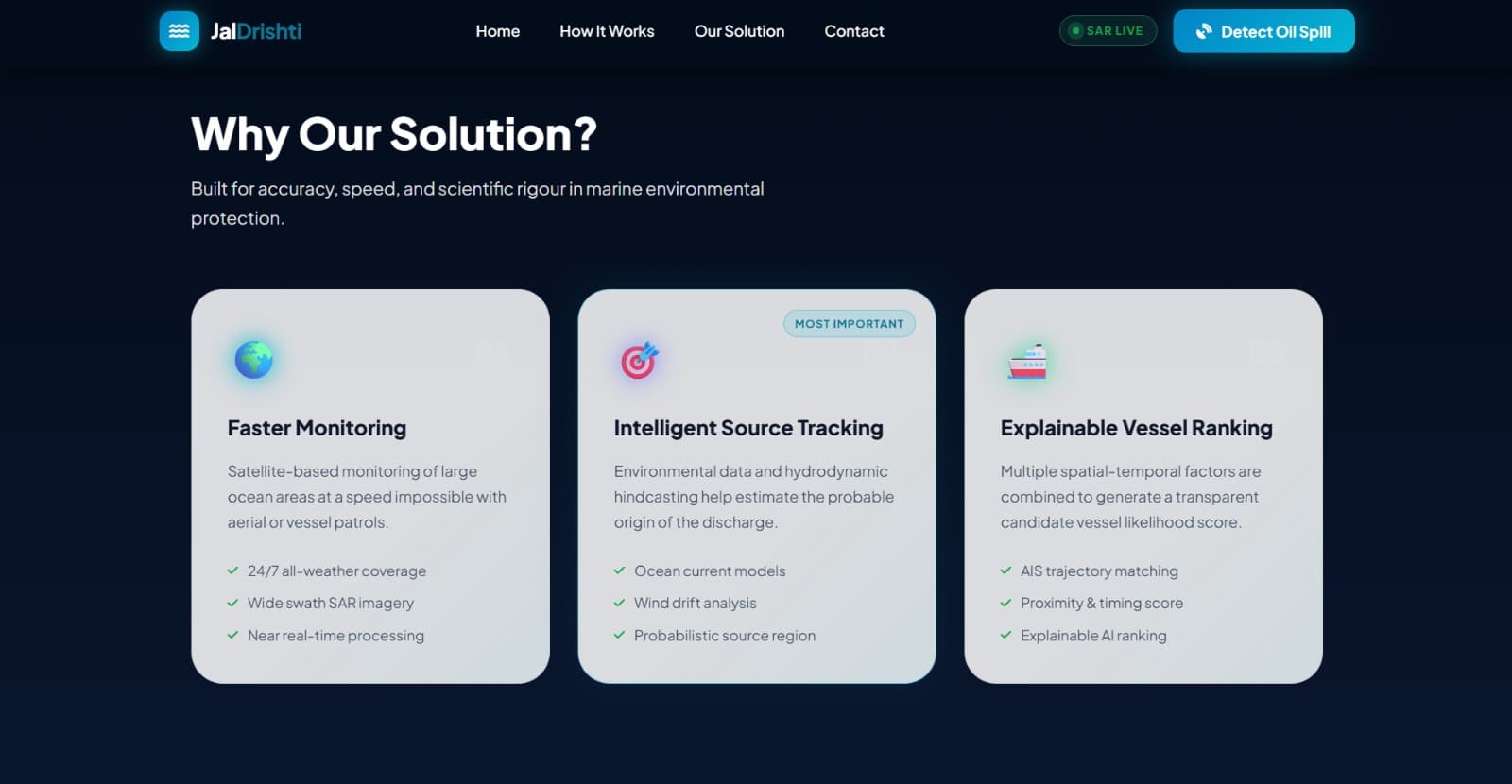
🛰️ Detect (SAR Computer Vision): Ingests Sentinel-1 radar scenes, strips radar speckle noise, measures slick area and geometry, and filters out natural false-positives like algal blooms. ⏪ Trace (Hydrodynamic Hindcasting): Reverses ocean wind and current vectors backward in time ($T-6\text{h}$) to calculate the exact Discharge Origin Zone where the dumping actually happened. 🚢 Attribute (AIS Forensic Engine): Correlates all maritime traffic in that corridor against a multi-factor forensic algorithm that catches rogue vessels based on spatiotemporal intersection, speed drops (pumping rate), and AIS transponder blackouts.