CompliPatch AI
Stop risky PRs before they merge.
Links
Additional info
How was your experience building with Codex?
Genuinely fast. Codex let us go from idea to a working product in hours — it scaffolded our FastAPI backend, the deterministic scanner rules, GitHub webhook signature verification, and the Next.js console, and handled multi-file changes without us losing the thread. The biggest win was iteration speed: we could try a rule, see it fail a test, and fix it in one loop. The main thing we had to manage was scope — Codex is happy to build more than you need, so keeping the demo deterministic and stable took deliberate prompting. Overall it felt less like writing code and more like directing it.
Describe your experience using Loops House as the hackathon platform. What worked well, what challenges (if any) did you face, and what improvements would you like to see?
Loops House kept everything in one place, which made the hackathon easy to follow — the submission flow with clear steps (screenshots, repo, live URL, video) was straightforward and we always knew what was left to do. What worked well was how guided the process felt; we never had to hunt for instructions. The one challenge was wanting a bit more clarity up front on required fields and formats so we could prepare assets earlier instead of mid-submission. An improvement we'd like: a live preview of how the final submission looks to judges, and the ability to save drafts as we go.
Tell us about your overall experience at Codex Community Hackathon Pune.
It was one of the best build experiences we've had — high energy, a strong community, and just enough pressure to ship something real. We didn't just prototype; we deployed a live, working product to AWS with a public webhook endpoint, which felt great. Being surrounded by other builders using AI agents pushed us to make ComplyPatch genuinely useful rather than a demo for its own sake. We left with a shipped project, new connections, and a much sharper sense of how to build fast with AI tooling.
What could Codex Community improve to create a better experience for participants?
A few small things would go a long way: sharing the judging criteria and submission requirements at the very start so teams can build toward them, and providing API credits/keys early to avoid setup delays. More clearly marked checkpoints during the day (and reliable wifi/power) would help teams pace themselves. Finally, a short window after the deadline to test deployed links would reduce last-minute stress. None of these took away from a great event — they'd just make an already strong experience even smoother.
Team
1 member- JAOwner
Jay Pathade
Overview
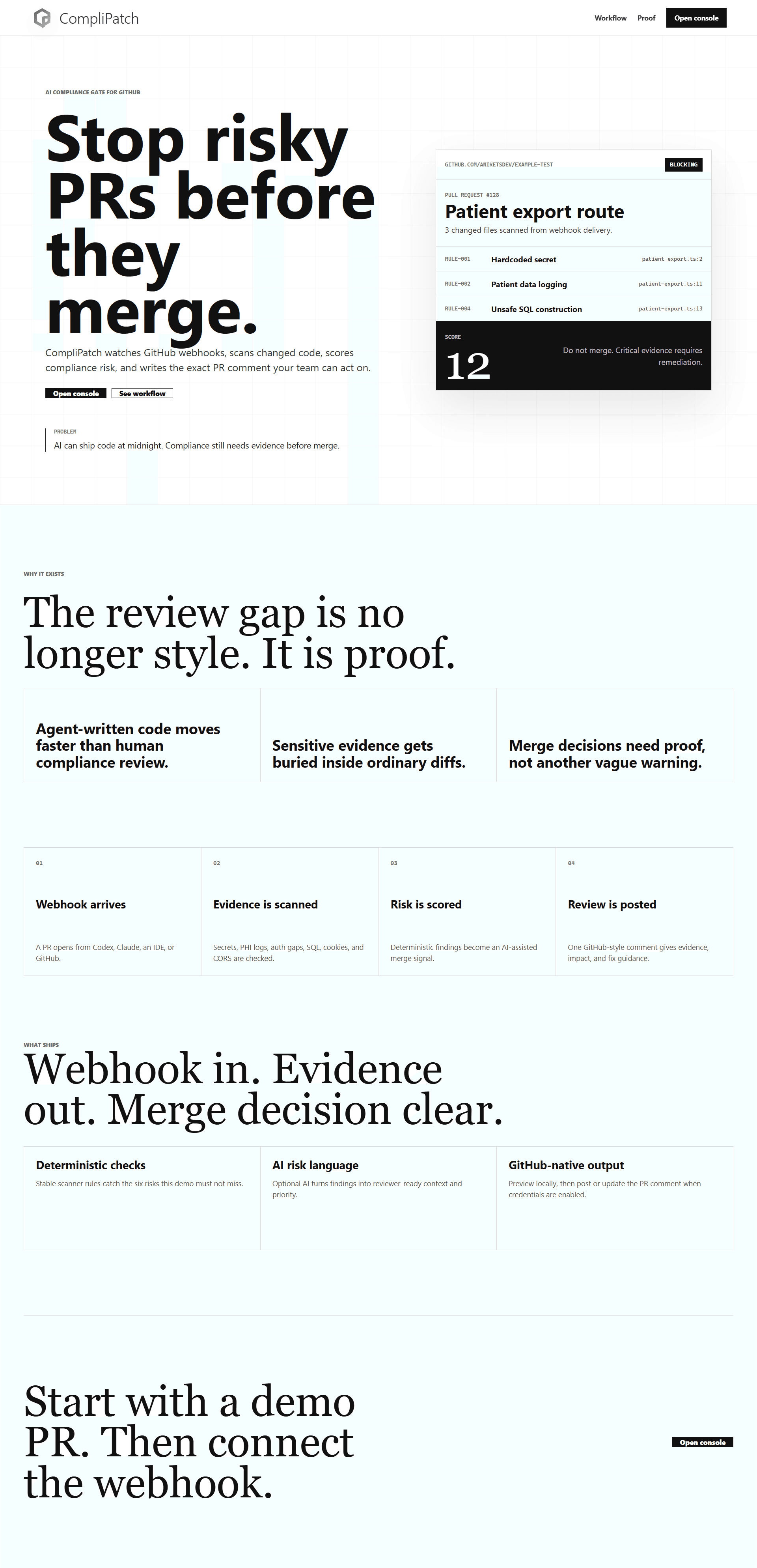
ComplyPatch AI is a webhook-native compliance gate for AI-written code. Connect a GitHub repo with one URL, and every pull request — from Codex, Claude, Cursor, or a human — is scanned automatically before merge.
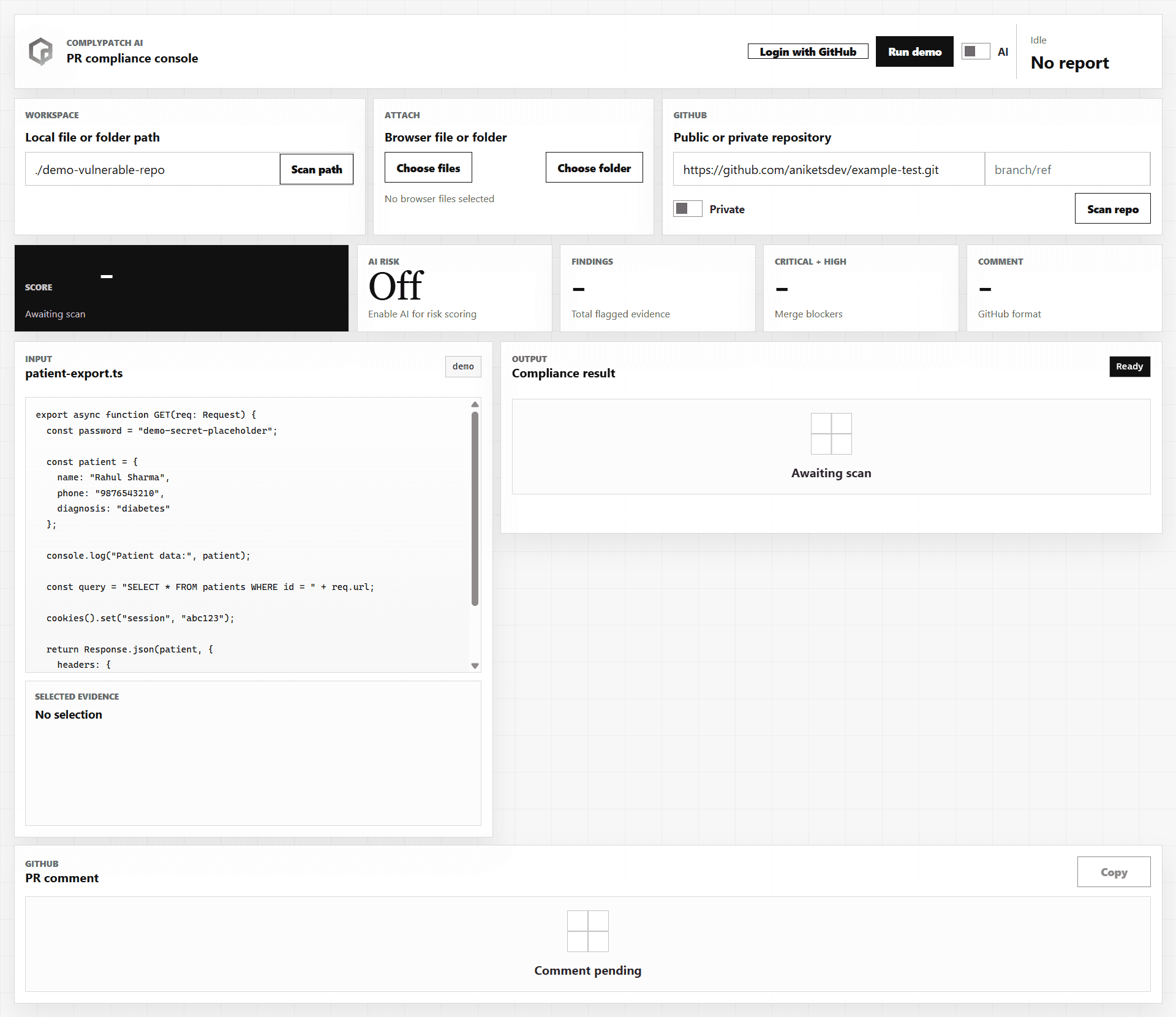
It catches the risks that get teams fined: hardcoded secrets, PHI/PII logging, missing auth, unsafe SQL, wildcard CORS, and insecure cookies. Deterministic rules produce a risk score and file-level evidence; optional AI adds reviewer-ready context; and ComplyPatch posts a single GitHub PR comment with the exact rule, severity, file:line, and a concrete fix.
Evidence before merge — automatic, auditable, reproducible.