Breakout Simulator
Predict how your content will break through with the audiences that matter, or you choose matter.
Additional info
How was your experience building with Codex?
Really good. I used Codex to build the entire project from scratch in one day. The AI agent pipeline, the simulation logic, the UI, all of it. The parallel task execution and tool-use capabilities made it easy to move fast. When something broke, I could debug and iterate in the same flow without switching context. Felt like having a very fast pair programmer who doesn't get tired.
Describe your experience using Loops House as the hackathon platform. What worked well, what challenges (if any) did you face, and what improvements would you like to see?
The platform was smooth to navigate. Submitting the project and linking the repo was straightforward. The AI mentor for ideation was a nice touch and it helped me refine my pitch angle early on. One thing that could be better is clearer visibility on deadlines and submission status in real time. Maybe a countdown timer or a checklist that shows what's complete and what's missing before the deadline hits.
Tell us about your overall experience at Codex Community Hackathon Pune.
It was intense in the best way. Building something start to finish in a day with other people doing the same thing around you creates a good kind of pressure. The energy in the room was solid. I liked that the focus was on shipping, not just ideating. Walking away with a working deployed product felt rewarding.
What could Codex Community improve to create a better experience for participants?
A bit more time would help, even a few extra hours makes a big difference.
Team
2 members- DE
Devansh Jangid
- RIOwner
Rishika Kumar
Overview
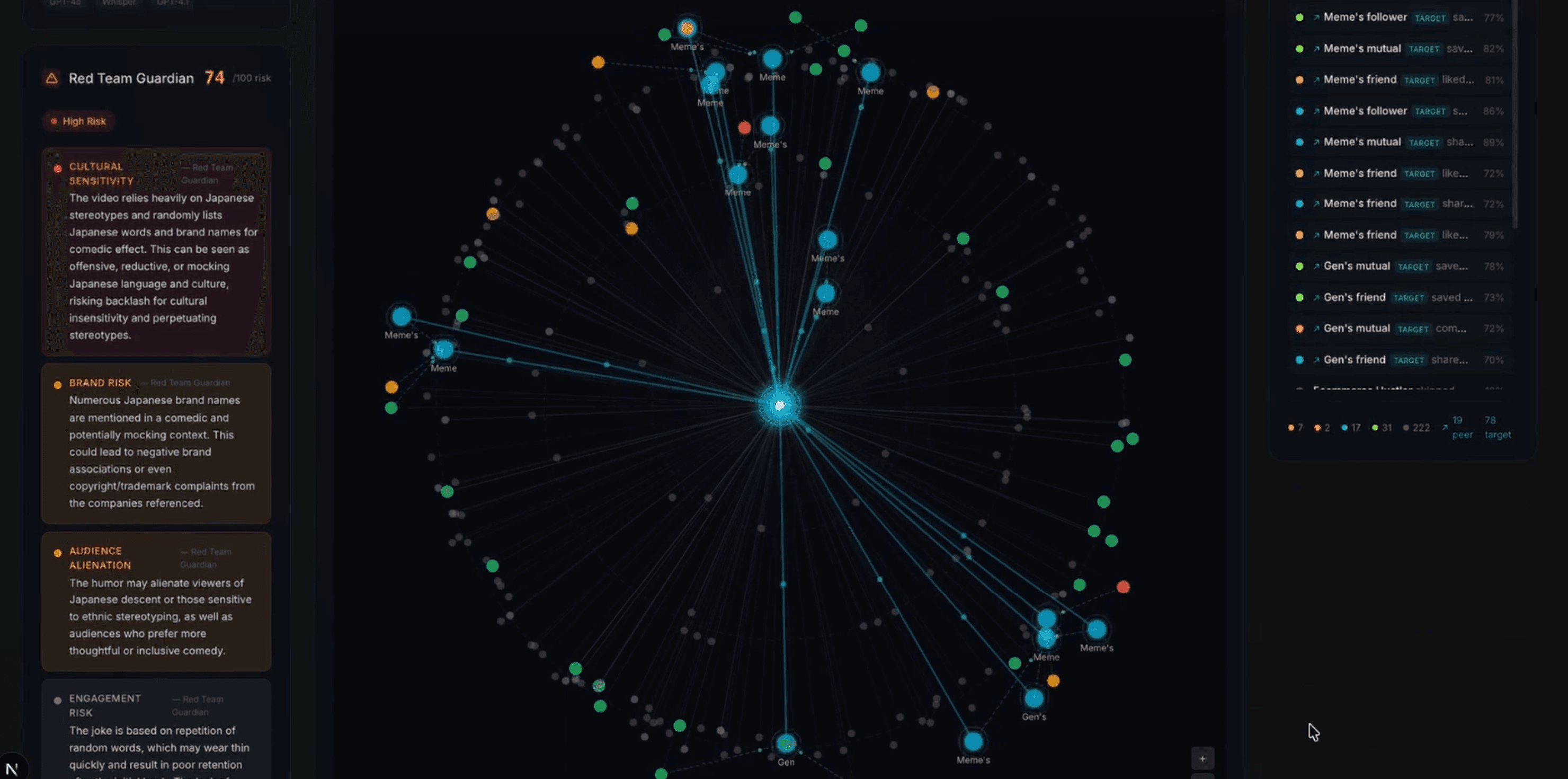
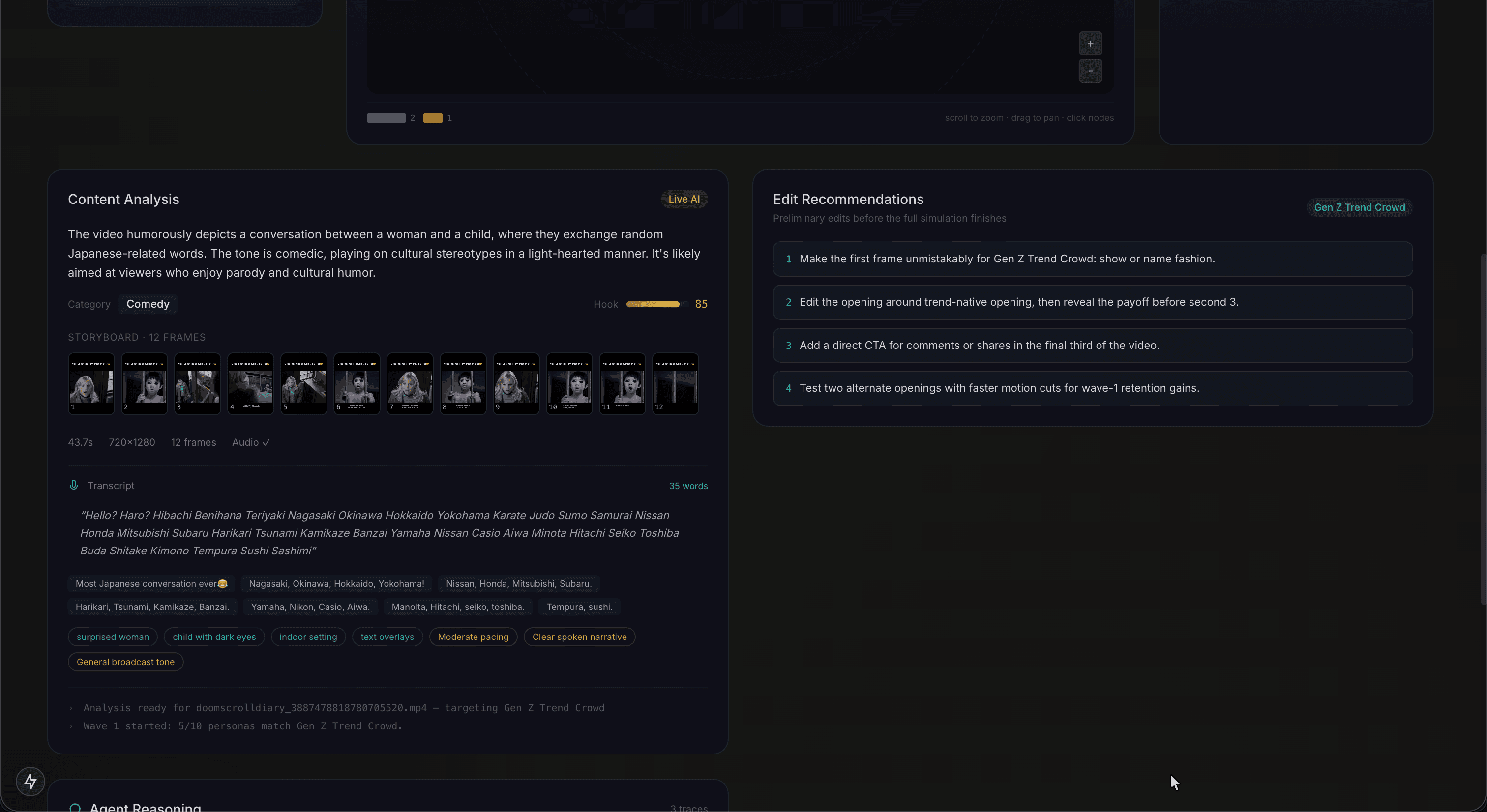
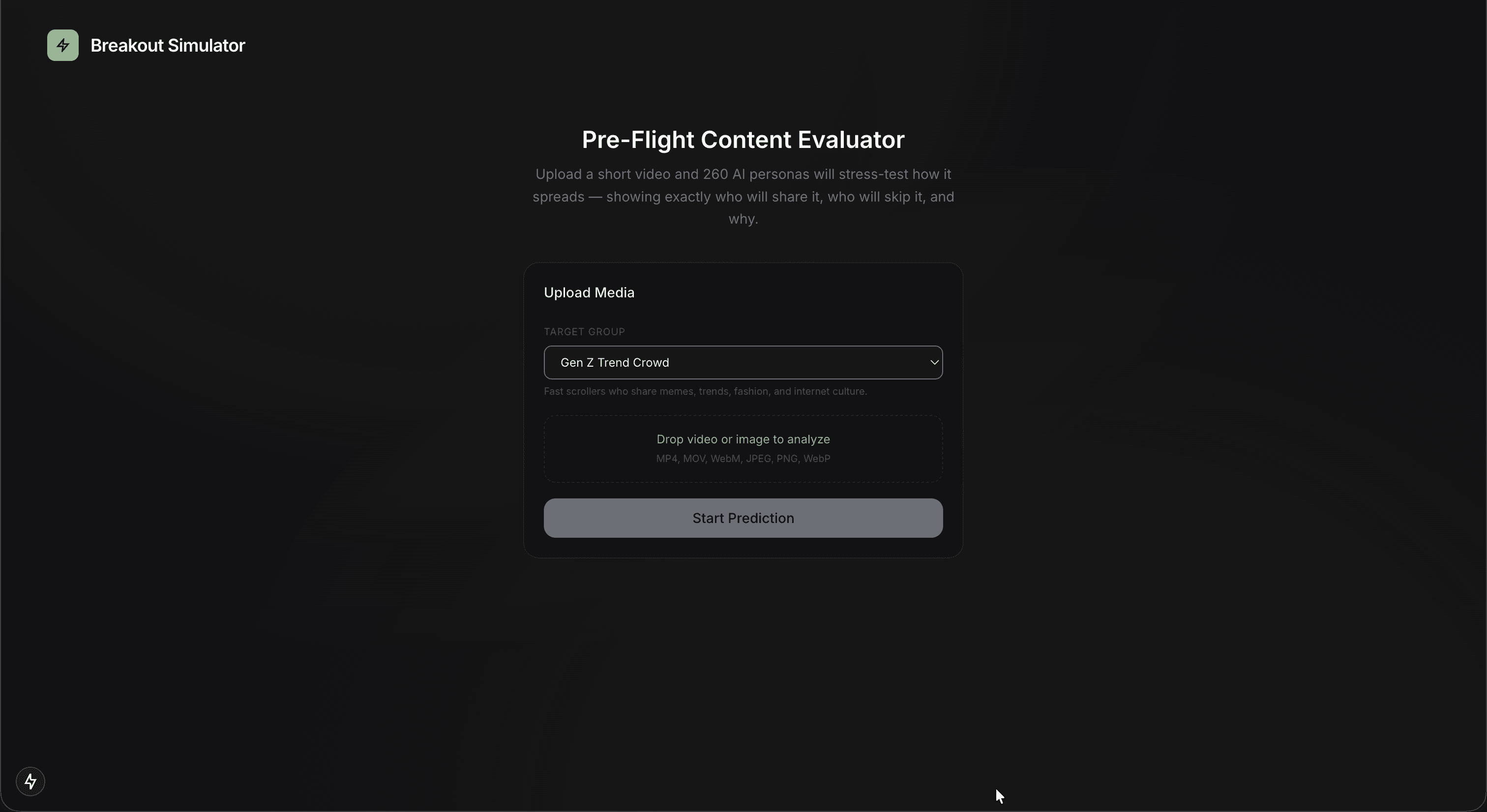
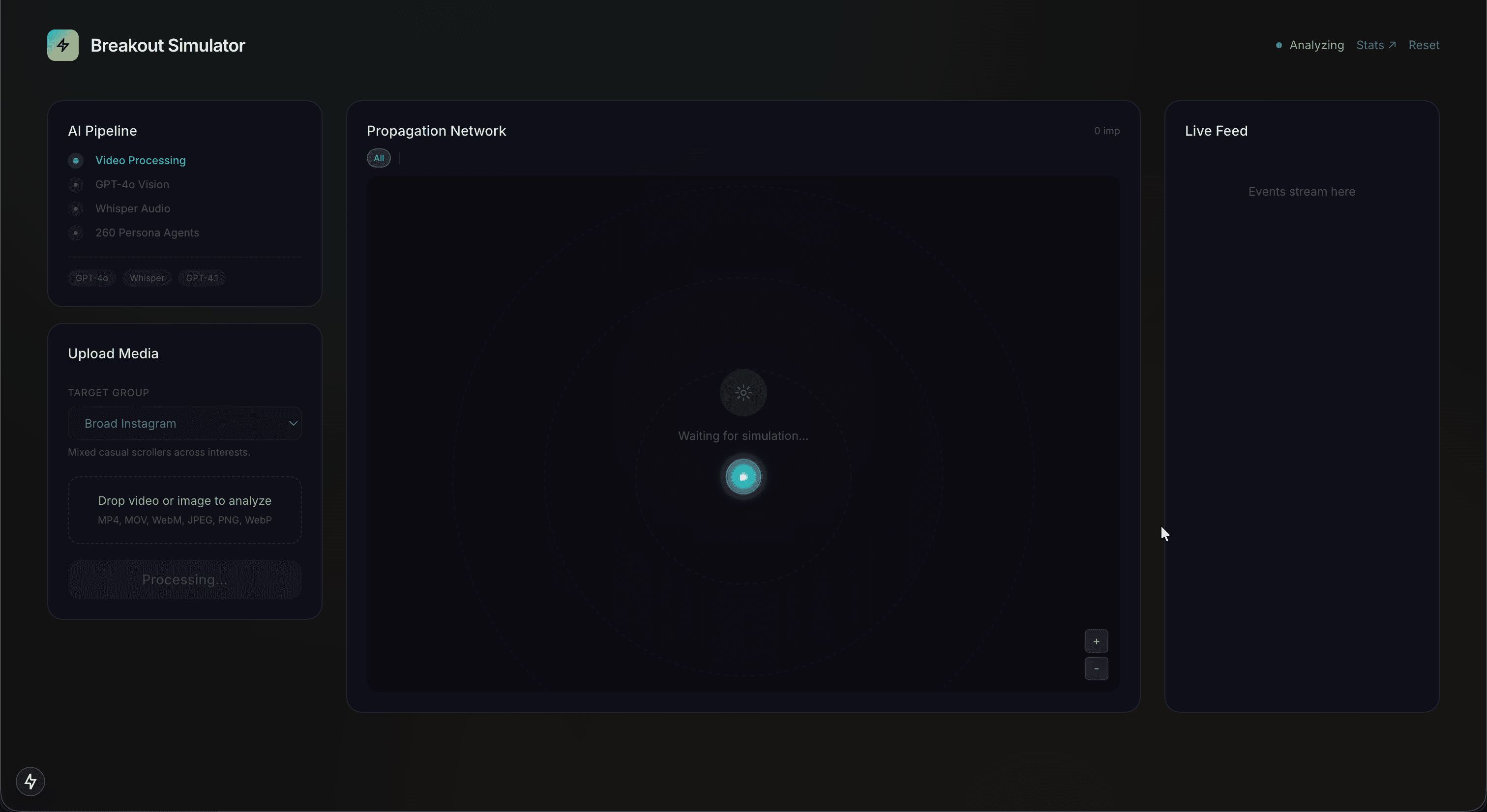
Breakout Prediction Simulator is a multimodal pre-flight testing tool for short-form content. Instead of posting a video and waiting to see whether it performs, creators can upload a reel, choose the audience group they want to reach, and simulate how that content might spread before publishing. The system analyzes the uploaded video across multiple signals: sampled visual frames, visible text overlays, audio, and speech transcripts when available. If a video has no human speech, it still works by building a visual narrative from the frames. After analysis, 260 simulated persona agents react to the content in waves, deciding whether they would skip, like, comment, save, or share. A key feature is target-group testing. The creator can select a desired audience, such as Gen Z trend viewers, developers, founders, fitness audiences, foodies, gamers, parents, or designers. The simulator then highlights how that specific group responds and produces edit recommendations tailored to them. The final output is not just a score. The app gives creators actionable guidance: what to change in the first few seconds, what text to add, what payoff to move earlier, and why the selected audience is engaging or dropping off. Built with Next.js, TypeScript, OpenAI GPT-4o vision, Whisper transcription, GPT-4.1 persona agents, and ffmpeg-based video processing, the project demonstrates how multimodal AI and agent simulation can help creators make better publishing decisions before content goes live.