Loops House

AUTOPSY AI : An autonomous AI QA engineer that hunts down bugs in a real browser and tells you exactly how to fix them.
Don’t just detect bugs. Perform the autopsy.
DevDay Exchange Community Metro Hackathon: Pune
Team
1 member- AAOwner
Aarya Pardeshi
Overview
Project Description
The problem we chose Developers ship bugs that only appear under unusual inputs or action sequences, the kind hand-written test suites rarely cover. When a bug does surface, reproducing it and tracing it to the right code eats hours of developer time. We picked this gap in the developer workflow: the distance between “something is broken” and “here is the cause and the fix.”
What we built AUTOPSY AI is an autonomous QA tool for developers, made of two parts:
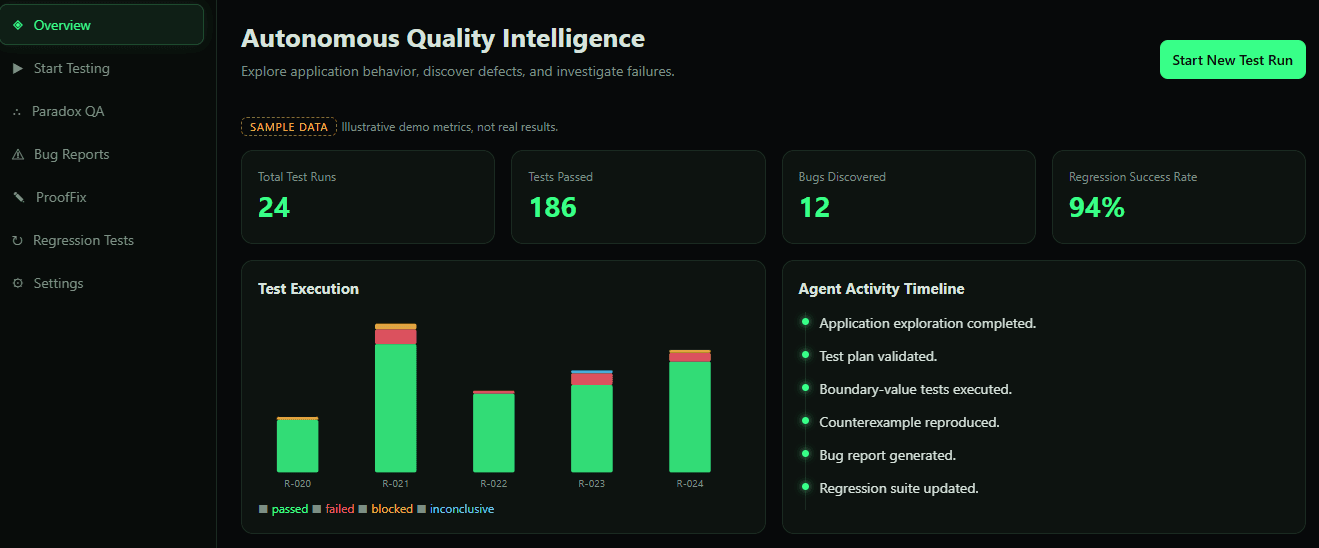
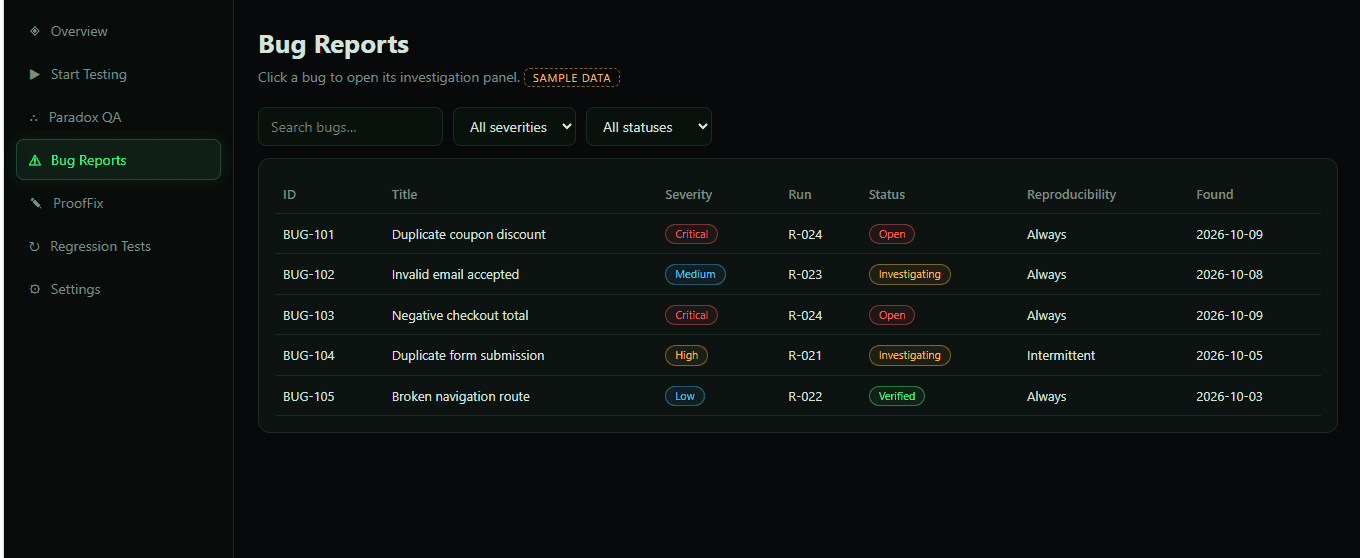
Paradox QA drives a real browser with Playwright, probing an app with edge-case inputs and unusual action sequences, and picks its next tests based on what it just observed. It records screenshots and reproducible steps for every failure, and separates genuine bugs from tests blocked by infrastructure issues. ProofFix takes a confirmed failure, its evidence, and the relevant source code, then suggests a likely root cause, a primary fix, alternative approaches, trade-offs, and recommended regression tests. It is recommendation-only and never edits your code.
The prototype runs on a controlled shopping-cart app with three planted bugs (repeatable percentage coupons, negative totals after a fixed discount, and negative quantities), built with a Node.js backend and a dashboard. ProofFix uses an LLM when configured and falls back to a deterministic demo mode without an API key.
Who it’s for
Developers and small teams who don’t have time to write exhaustive test cases QA engineers who want autonomous edge-case exploration alongside their existing tests Startups and solo builders who need bugs caught before users find them
What it does for them
Discovers hidden bugs without manually written test cases Gives concrete, reproducible evidence instead of a bare “test failed” Connects the failure, the evidence, the code, and a proposed fix in one workflow Cuts the time from detection to diagnosis